• Skip to main content
  • Skip to primary sidebar

Training for Translators

Classes for translators and interpreters

  • Start here
  • Blog
  • Classes
    • Coaching for freelancers
    • Subscription
  • Books
    • Translate my books
    • Book Shop
  • About/Contact
    • Privacy Policy
  •  
  • Account

Off topic

Dec 19 2023
Corinne McKay

The books I read this year (2023)

Greetings, Training for Translators readers! Welcome to the final post of 2023, and thank you so much for your support this year. I hope you’ve found the blog helpful, and if you’re looking to get a jump on your 2024 professional development, our January classes (Using objective data to set your freelance rates; Getting started as a translator or interpreter in the age of AI) are now open for registration!

As I did last year, I’ll wrap up this year with some mini-reviews of the books I read, then the newsletter will take a holiday break, and I’ll be back in your inbox in January with some new content!

I read 15 books this year, and I have one on deck for winter break. In the order in which I read them, here we go!

1. Olav Audunsson: Crossroads, by Sigrid Undset, translated from the Norwegian by Tiina Nunnally. Admittedly, I’m obsessed with the Olav Audunsson series: I read the first two volumes in 2022, and couldn’t wait to dig into this one. This is medieval historical fiction set in Norway, written by a Nobel prize winner, and it reminds me quite a bit of Hilary Mantel’s Henry VIII series. I think with this series, you love it or you don’t, and I love it: I love the medieval stuff, the family drama, the stories about traveling around Norway during that time…bring it on!

2. The Ransomware Hunting Team, by Renee Dudley and Daniel Goldin. A complete 180 from the first book I read this year, this is an excellent non-fiction book by two technology reporters at ProPublica, focusing on how ransomware attacks happen, and a team of cybersecurity specialists who work in the ransomware recovery world.

3. No One Would Listen, by Harry Markopolos. I got sucked into the whole Bernie Madoff story after watching the Netflix series “Madoff: The Monster of Wall Street,” and I wondered if there were any interesting books on the topic. I really loved this one, by the forensic accountant who was a primary whistle-blower on the Madoff case. It’s just nerdy enough, and gives you a lot of the financial details on how Madoff pulled off such an extraordinary level of financial fraud, and what it took to uncover it.

4. The Prodigal Child, by Irène Némirovsky, translated from the French by Sandra Smith. I read this in English because Sandra Smith is a friend and gifted me the book, plus I just love Sandra’s translations. This is a beautiful and heartbreaking short (80 pages) novel, set in turn-of-the (last)-century Russia, about a boy with a gift for storytelling, who is adopted and then rejected by a wealthy patroness. It’s so incredibly well-written and well-translated; I don’t typically read “downer” fiction (to be honest) but I highly recommend it for the quality of the prose!

5. Inseparable, by Simone de Beauvoir, translated from the French by Sandra Smith. If you’re into Simone de Beauvoir, you need to read this. It’s the semi-fictionalized story of Simone de Beauvoir’s close friendship with Zaza Lacoin (names are changed in the novel) and it’s so good! Here’s the New York Times review of it.

6. Unorthodox: The Scandalous Rejection of My Hasidic Roots, by Deborah Feldman. Another book that I found via the Netflix miniseries! I liked both the TV show and the book, but/and they’re very different. Both are worthwhile; the TV series is a lot more sensational and dramatic (how unusual for a TV series…haha), but Deborah Feldman is an excellent writer, particularly for someone who was prohibited from even having a library card as a child, and her path from Brooklyn to Berlin is really gripping as a story.

7. Ducks, by Kate Beaton. I’m not a graphic novel person in general, and this was one of my absolute favorite books of this year, and maybe even the past few years. Kate Beaton is an artist from Cape Breton, Nova Scotia, who ended up working in the oil sands of Alberta to pay off her student loans, then drew/wrote a graphic novel about it. I actually heard about this book on a Marketplace podcast about the offbeat jobs that people do to pay back their educational debt, and I was absolutely captivated by it. I’ve since gifted it to three other people who loved it too. A must-read!

8. Hello, Beautiful, by Ann Napolitano. I was honestly pleasantly surprised by this book. It’s a fairly long novel (not my typical thing), and an Oprah’s Book Club Pick (with all due respect, also not my typical thing), and I honestly really liked it. It’s a multi-generational family story about a group of four sisters in Chicago, intertwined with the complex family story of one of their husbands. I like reading about complicated family dynamics, and Ann Napolitano is a great writer. This book is not something I would have ordinarily picked up, and I’d actually recommend it!

9. There There, by Tommy Orange. My mom was reading this with her book club and loaned it to me; it’s definitely really well-written (Pulitzer Prize finalist, PEN Hemingway award). It follows various Native American characters in Oakland, CA whose paths become intertwined on the way to a Powwow. I’d recommend this book if you don’t already feel relatively beaten down by the reality of Native Americans in the U.S. That may sound like kind of a weird way to put it, but, having done a bunch of trips to the Navajo Nation with our animal rescue group, I sort of felt like, I’m so sad when I think about all of this (“this” being stories about alcoholism, fetal alcohol syndrome, early death due to substances and despair, grandparents raising their grandkids) that I don’t really have it in me to read 12 characters’ stories about it. But the book is very well written!

10. Who Gets What–And Why: The new economics of matchmaking and market design, by Alvin Roth. I’d call this, “The book that could have been a podcast.” Actually, it’s the book that was a podcast, and that’s how I found out about it. I think I heard the author interviewed on the Freakonomics podcast, and I thought, “Whoa, really interesting, I want to read his book!” and it turns out that the most interesting parts of the book were what he talked about on the podcast. The author is obviously brilliant (Nobel Prize winner), and has designed “markets” for things like organ donation. It’s a fascinating topic, but the book makes the same point many, many times, and I’d recommend just reading an article or listening to a podcast with this author instead.

11. Fuzz: When Nature Breaks the Law, by Mary Roach. I love Mary Roach, and I’m an animal person, so this book was a winner for me (a gift from my sister-in-law). It’s a non-fiction look at the intersection between humans, animals, and other forces of nature (an entire chapter is devoted to how you can be killed by a tree). I find Mary Roach’s books really informative but also funny and easy to read. Definitely recommended!

12. Passion Simple, by Annie Ernaux (I’m including the French title here because I read it in French, it’s “Simple Passion” in English). I was really excited to read this book after Annie Ernaux won the Nobel Prize, and I hope I’m not going to hell for saying this, but I hated this book and found it honestly kind of cringe-y. Annie Ernaux is (it goes without saying) an excellent writer, but this is kind of a stream-of-consciousness account of the main character’s love affair with “a mysterious foreigner” who becomes her all-consuming obsession. Partially, I think that the subject matter just hasn’t aged well: it was written in the 90s, and maybe (maybe??) at that time, a book about a grown, independent woman who saves a glass that her aloof, unreachable lover drank out of so that she’ll have a relic of his saliva came off as less…anachronistic?? I don’t know…I’m going to give Annie Ernaux another try (“The Years” is on deck) but I was not a fan of this book.

13. Going Infinite: The rise and fall of a new tycoon, by Michael Lewis. I know, this is one of those books that everyone read this year, but I got really drawn into the Sam Bankman-Fried story, so I had to read it! You’ve probably heard the controversy by now (that Michael Lewis kind of goes easy on SBF, who, we now know, may be headed for multiple decades in prison), but Michael Lewis is a good writer, and this is a fun, captivating read, plus I knew almost nothing about the whole crypto sector before I read it.

14. Lone Women, by Victor Lavalle. OK, speaking of not my typical read: a fantasy-horror Western?? But wait, I actually really liked this book. It was featured in the book recommendations of one of my favorite podcasts, Melanie Padgett Powers’ The Deliberate Freelancer, and I had a couple of long airplane rides coming up, so I was, like, what the heck. This book is so good! It’s based on the true concept of “Lone Women” (solo women homesteaders) in Montana in the early 1900s, and I got soooo drawn into the story (what’s in the trunk?????). Highly recommended, particularly if you like fantasy-horror novels (which I normally don’t, but I really liked this one).

15. How to Say Babylon, by Safiya Sinclair. Oh. My Gosh. I’d say that this, along with “Ducks,” is my other must-read recommendation for this year. Safiya Sinclair is a poet, and I found out about this book because it was excerpted in The New Yorker. The book is a memoir about the author’s childhood in a Rastafari family in Jamaica, through her experience as a graduate student in the U.S., and it is crazy/beautiful/captivating/educational/heartbreaking/eye-opening. Like, it is all the things that a really good memoir should be, plus Safiya Sinclair is such a good writer that I would sometimes read the same paragraph over and over, just because it was so beautiful. I had no idea that “Babylon” is the Rastafari term for “mainstream Western society” (my husband lived on St. Croix for a couple of years after college and enlightened me about this). Another must-read.

If you’re looking for some holiday break reading, I’d suggest (in no particular order, and depending on your literary tastes): Ducks, Lone Women, and How to Say Babylon.

And with that, thanks for a great 2023 and I’ll talk to you in 2024!

Corinne McKay (classes@trainingfortranslators.com) is the founder of Training for Translators, and has been a full-time freelancer since 2002. An ATA-certified French to English translator and Colorado court-certified interpreter, she also holds a Master of Conference Interpreting from Glendon College. For more tips and insights, join the Training for Translators mailing list!
Written by Corinne McKay · Categorized: Off topic

Dec 05 2023
Corinne McKay

OT: Shopping for and purchasing an electric car

I haven’t done an off-topic post in a while, so here goes! This is a long post that I decided to write for the benefit of other people who are shopping for an electric vehicle (EV); only read it if you’re really interested in EVs!!

We’re a one-car family (or rather, my husband and I are a one-car couple, our university student daughter has her own minivan!), and our much-loved 2011 Subaru Outback gave up the ghost (a bunch of expensive repairs that were not worth doing) a couple of weeks ago. For about the past six months, I had been saying, “We’re never buying another gas car; when we have to replace this car, we’re going fully electric.” Somehow, I was envisioning that “when we have to replace this car” would be maybe two to four years down the road (it had 140K miles on it, which is actually not that much for a Subaru), but unfortunately the universe heard me, and “down the road” turned out to be sooner than we anticipated. I texted my husband from the mechanic and said, “You know how I’ve been whining that I’m the last person in Boulder who doesn’t have a Rivian? Welllll, that may not be true for much longer!!”

A few factors weighed into this decision:

  • We live in an area with a pretty high percentage of electric cars, so there are lots of chargers available
  • We also live in an area (Denver, Colorado metro) with horrible ozone levels from vehicle air pollution
  • We’re in a wind power cooperative, so our home electricity is fossil fuel-free

We also had some major decisions to work out, namely whether an EV would work for our driving habits, which are kind of the opposite of the way the rest of the world drives. Neither of us commutes (my husband works from home; I work at an office outside our house, but there’s very limited parking so I either bike or ride the bus), but we drive up to the nearby mountains (about 75 miles roundtrip) nearly every weekend to go hiking, mountain biking, or skiing, and we take long road trips during the summer (typically to British Columbia, about a 20-hour drive from where we live).

I started by surveying my Facebook friends, a number of whom have EVs, and our neighborhood e-mail list, which is a great source of information about the local aspect: where to charge, available rebates, etc. Interestingly enough, I didn’t encounter anyone who said, “We don’t like our EV,” or “We’re living with it for now but not planning on buying another one.” And many people said, “We had some hesitations, but we love this car,” or “Best vehicle-buying decision we ever made.” Most of all, our friends who have EVs universally assured me that, once you get in the EV mindset, it’s like any other car, but you charge it instead of putting gas in it. So we started shopping, with the following requirements:

  • Range of at least 250 miles
  • All-wheel drive
  • Good winter battery performance, particularly because we don’t have a garage
  • Decent amount of cargo space for skis, camping gear, etc.
  • Not crazy expensive (all joking aside, the Rivian would actually fit our needs, but runs US $75-95K which is outside our budget)

After doing a bunch of research on Edmunds and MotorTrend (I particularly appreciated MotorTrend’s long-term reviews, where one of their staff members drives the car for a year), we narrowed the list down to the Kia EV6, the Hyundai Ioniq (the EV6 and the Ioniq use the same power train, which Hyundai and Kia developed together), the Volkswagen ID4, the Tesla Model Y, and the Ford Mustang Mach-E. We quickly eliminated the ID4 due to its poor battery performance in cold weather, and decided that our top candidates were the EV6 and the Ioniq, and that we’d like to test drive the Model Y and the Mach-E just for kicks.

My sister-in-law had turned me on to Turo, a car rental service that is like AirBnB for vehicles. We decided to demo an EV6 and an Ioniq, because we wanted to take them on the kind of drives that we actually do, not just drive them around the block from a dealership. This went well and was definitely a good decision. On a snowy day, we picked up two friends in our Turo EV6 and headed up to the mountains for a hike; this gave us the chance to test the EV6’s performance in the snow (excellent), and to see how much battery range it used for this trip (a lot on the way up, not much on the way down, because of the regenerative braking). We then rented an Ioniq on Turo, drove a Tesla Model Y at our local CarMax dealership, and drove a Mach-E with the broker who we ultimately ended up using to purchase the EV6 Wind that we ended up buying (more on this below). Our initial assessments were:

  • We loved pretty much everything about the Kia EV6 Wind, with all-wheel drive and the long-range battery. It has a range of 280 miles, a good amount of cargo space, a 60/40 fold-down rear seat (so you can fold one side of the back seat down and still fit two people), and a good mix of manual and touch-screen controls. To us, the interior felt like a luxury car (we’re not car people, so take this with a grain of salt!); super-comfortable seats, excellent safety features like blind-spot cameras (these come with the Kia technology package), heated and ventilated seats (nice to have in an EV because the forced-air systems use a lot of battery power), a “charge search” feature to find the nearest charging station, and various regenerative braking modes to conserve battery power. The Kia also comes with a 10-year warranty, which was really appealing.
  • The Hyndia Ioniq wasn’t bad, and it’s mechanically basically the same car as the EV6, but we didn’t love it. Compared to the EV6, the suspension felt tighter/less cushy, and the interior felt kind of cheap and plastic-y. We’ve never bought a brand new car, so if we were going to buy brand new, we wanted to love the car, and we liked but didn’t love the Ioniq.
  • The Tesla Model Y was a totally different beast. Teslas use an all-touchscreen interface (no manual controls other than the turn signals; you use the touchscreen to adjust the mirrors, the air vents, the windshield wipers, basically everything). Everyone we know who has a Tesla assured us that you get used to this, but I had some concerns about it, and I worried that the large touchscreen (about the size of a laptop screen) could be easily broken by a lot of the stuff we typically carry in the car, specifically skis. Additionally, the “clean and minimalist” Tesla interior felt to me kind of harsh and cold (I couldn’t really imagine driving people in the back seat on a long drive), and I had some hesitations about how hot the car would get in the summer because of the glass roof. I see what people love about Teslas: the no-hassle purchasing because they don’t have dealerships, the cool navigation features (give it a destination and it tells you where to charge), and the fact that it drives like a sportscar (I floored it from a red light just to see what it did, and it was honestly kind of terrifying). I see the appeal of Teslas, but we ended up feeling like it wasn’t the car for us, and I have a hard time with the idea of giving Elon Musk any of my money, much less a huge amount of my money.
  • The Ford Mustang Mach-E is a nice car, and the “made in America” tax credit (which none of the other cars we looked at qualified for) was definitely appealing, plus we planned to pay cash for the car, but Ford offers, at least some of the time, 0% financing for 48 months. I drove one with our auto broker and liked it, but it’s more of a sports car than we’re looking for, and there’s not a ton of cargo space compared to the other options we looked at. Plus, I had some concerns about its durability and reliability, given that we tend to keep cars until they die.

We basically settled on the Kia EV6 Wind AWD long-range model. When it came time to buy, we had not one, but two horrible experiences at local Kia dealerships. The first dealer told us that the attractively priced car we saw on their website was “unavailable,” but as luck would have it (insert eye roll here), they had an “even nicer” model for only $8K more. They also refused to directly answer my questions about what sorts of rebates or discounts might be available on the EV6. We moved on to a second dealership, which, believe it or not, was even worse, in that they advertised a $5K cash discount on their website that they then refused to give us when we went to the dealership to try to buy the car, first telling us we must have mis-read the price (I had a screen shot), then that the discount was only available if we financed the car (it was specifically listed under the “Cash” tab), then finally that it was a mistake and they couldn’t sell us the car at that price. I reported them to the Colorado Auto Industry Division for deceptive pricing practices, and asked my husband, “Should we just move to Switzerland,” (where we have dual citizenship) “…and completely stop driving?” I honestly wondered if we should just give up on the whole idea.

But then…a friend referred me to another friend, who is an auto broker. I honestly had no idea that this service existed, and now that we used a broker, I will also honestly never enter a car dealership again, ever. We used Dustin Williams with H.M. Brown, a large auto broker in Colorado. Within two days, Dustin had found two cars (an EV6 and a Mach-E) for us to try; we immediately settled on the EV6 and Dustin negotiated a nice discount on the MSRP, plus brought the car and the paperwork to our house, and the dealer paid his fee, so there was zero cost to us. This was honestly a great experience and I would recommend Dustin’s services to anyone else in Colorado.

We’ve only had the car for two days (!!) but so far, we love it. We’re still learning about its various features (lots of watching YouTube videos!) and we’re starting to plan out where and when to charge it on a couple of road trips we plan on taking over Christmas break. Our plan, at least in the short-term, is to trickle charge the car at home during the week (we have an outdoor electrical outlet right next to our driveway), using a simple charging cable that cost about $160. This adds about five miles of range per hour, but in our case, the car largely sits in the driveway during the week, so this seems doable. There’s also a Level 2 charger (fully charges the car overnight) at the middle school one block from our house, and with one of our Turo cars, we tested a Level 3 charger in a parking garage in downtown Boulder. This super-fast charging isn’t great for the car’s battery health in the long term, but it’s impressively fast: charged the Hyundai Ioniq from 30%-80% in the time it took us to drink coffee.

We’re planning some ski trips in the near future, and I’ll report back in a month or so on how life with the EV is going!

Corinne McKay (classes@trainingfortranslators.com) is the founder of Training for Translators, and has been a full-time freelancer since 2002. An ATA-certified French to English translator and Colorado court-certified interpreter, she also holds a Master of Conference Interpreting from Glendon College. For more tips and insights, join the Training for Translators mailing list!
Written by Corinne McKay · Categorized: Off topic

Jun 13 2023
Corinne McKay

Travel: A week in Iceland

I took last week off to take a real vacation (my computer stayed home!) to Iceland, with my friend and colleague Eve Bodeux and our mutual friend Ann. We had an amazing time; I had changed planes in the Reykjavik airport many times, but I had never done the Icelandair free stopover, much less taken a real trip to Iceland. Eve suggested Iceland as a destination, Ann suggested renting an RV, and we booked it! By buying the tickets about six months in advance, we paid only ~US $600 each (less than I paid for my daughter to fly from New Jersey to Colorado for winter break!!), so although Iceland itself isn’t the cheapest travel destination, it was an affordable trip overall.

Day one: Arrival, Blue Lagoon, and Thingvellir

We flew nonstop (overnight) from Denver to Reykjavik, arrived at about 6 AM and killed some time drinking coffee in the airport while we waited for the RV rental place to open. We booked an RV through Geysir, and overall we were happy with it. RVs in Iceland tend to be on the older side and ours was no exception, but we were really happy that we had an RV versus staying in hotels and eating in restaurants.

In terms of Icelandic tourist infrastructure, basically there’s the greater Reykjavik area (tons of restaurants, hotels, and tourist services), and then everything else (where the supply of hotels and restaurants drops off precipitously, and some fairly large towns have very few services). Renting an RV allowed us to avoid spending time chasing after places to stay and eat, which was a big win.

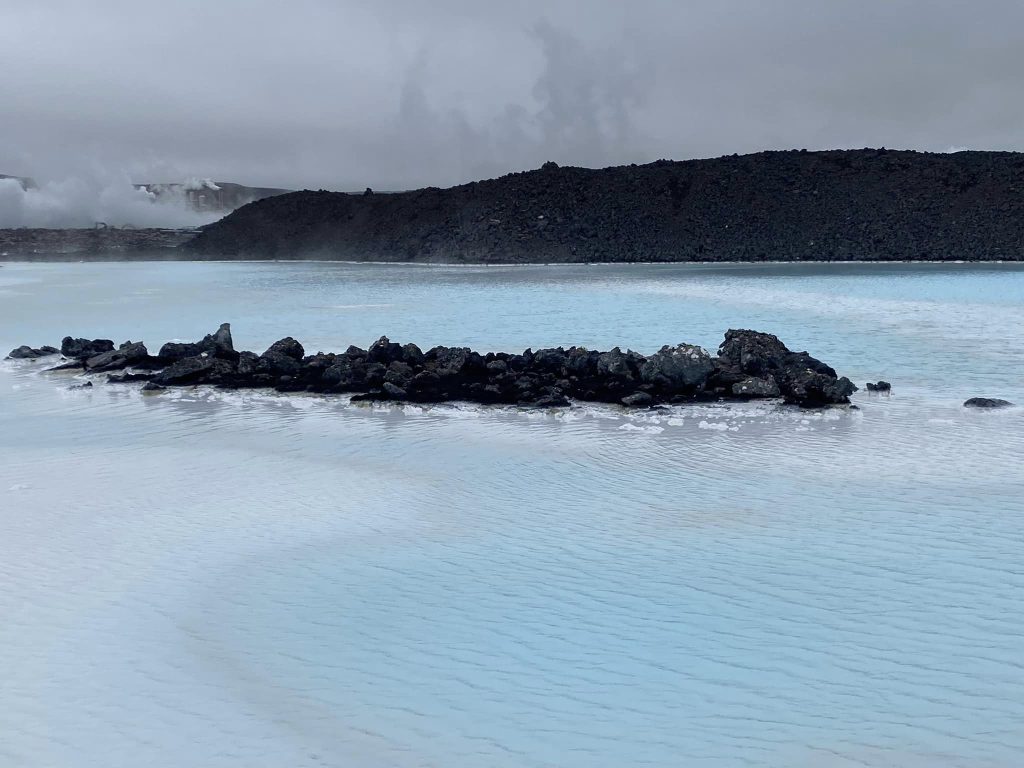
After we picked up the RV, we headed straight to the Blue Lagoon; a geothermal hot spring that is a classic on the Golden Circle tourist trail but/and was also really incredible! We did the basic (Comfort) ticket which was totally sufficient (you get a towel and a drink), and it was really amazing to float in the ice-blue steaming water after being on the plane all night. Call me easy to impress, but I honestly didn’t expect the Blue Lagoon to be that blue; it’s really blue! When we were there, it was not unpleasantly crowded; I was actually expecting it to be more crowded.

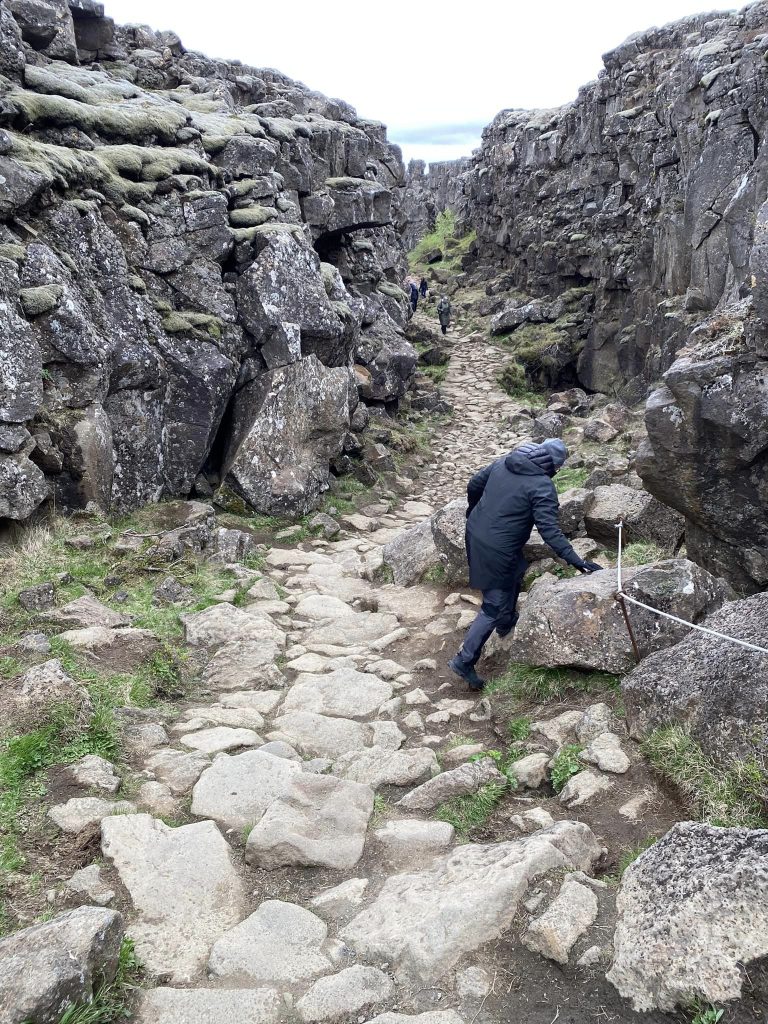
After a couple of hours of soaking, we drove to Thingvellir National Park, a historic site where the Icelandic Parliament met, starting in 930 AD. There’s a nice hike through the park, where you can also see lots of the tectonic plate activity that Iceland is famous for. Admission is free and we spent a couple of hours tramping around. We then headed to the campground by the Faxi waterfall which was very pretty, uncrowded, and had an electric hookup for our camper, plus clean bathrooms and a place to wash dishes. It had been drizzly all day but only started pouring after we were at the campsite!

Day two: The rest of the Golden Circle

On day two, we went to the Geysir geothermal area and the Gullfoss waterfall, both very impressive! As expected, there were more tour bus crowds here, but at Geysir we hiked to the upper observation area where you can watch the Strokkur geyser erupt (very cool!), and then we ate lunch in the Geysir restaurant which was very tasty. You get pretty wet on the observation decks at Gullfoss, so we then warmed up at the Secret Lagoon hot springs, which are smaller but more rustic than the Blue Lagoon. There’s a nice changing room with lockers, and the pool itself is very peaceful and beautiful. We then drove down to the coast village of Vik (vik=bay; Reykjavik=smoky bay) where we got a campsite at Vik Campsite. The campground is right near the center of town, and (as with most campgrounds we stayed in) was around US $40 for three people and an electric hookup. Vik is a cute town right on the water, with a nice cafe and restaurant in the shopping plaza with the supermarket.

Day three: Black sand beaches and glacier lagoon

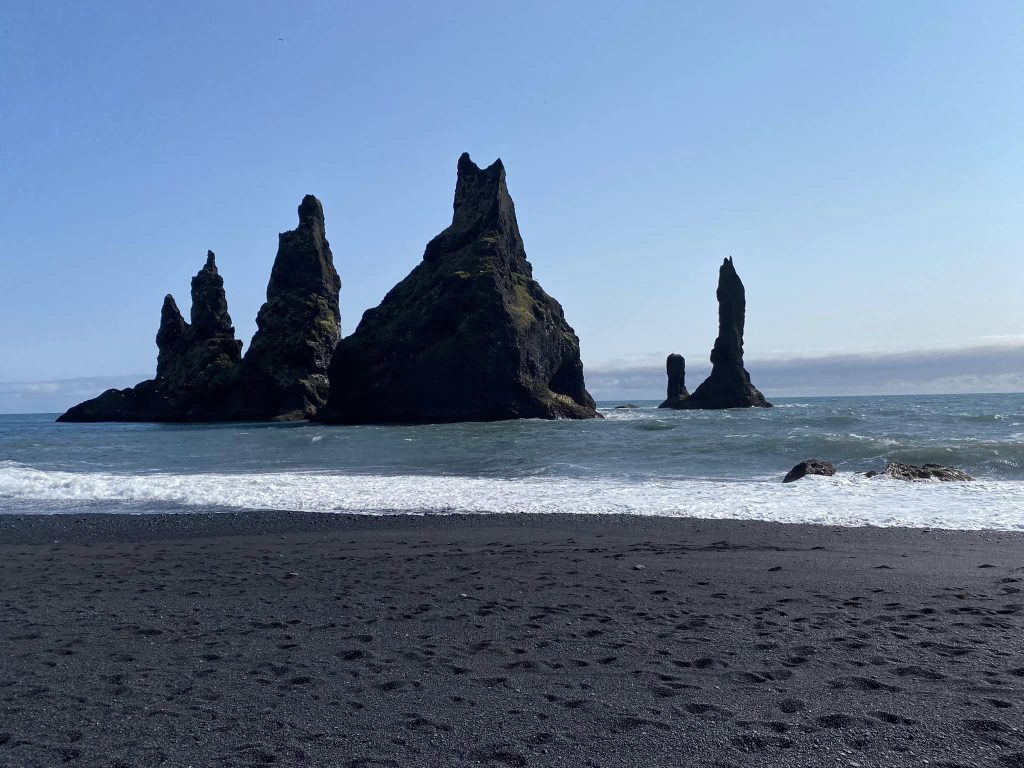
After camping in Vik, we headed to the famous black sand beaches; it’s worth doing this area from two different directions. From the shopping plaza in Vik, you can walk down to the long black sand beach that also has a jetty that you can scramble to the end of. The beach was pretty deserted when we were there (it was sunny but very windy) so we had it pretty much to ourselves to explore. We then drove back toward Reykjavik for about 10 minutes to the Reynisfjara beach side, where you can get right up to the iconic rock formations (basalt) that are in all of the black sand beach tourist photos. The Reynisfjara side is smaller and much more crowded, so we were glad we did both angles! We then drove to the Jokulsarlon glacier lagoon, (more on that below) which was beyond stunning. The closest camping to Jokulsarlon is in the national park in Skaftafell (about 45 minutes back toward Vik), so we drove back there and staked out a campsite at the very nice campground (geothermal hot showers, nice place to wash dishes, several nice hikes right from the campground).

Day four: Glacier kayaking and a waterfall hike

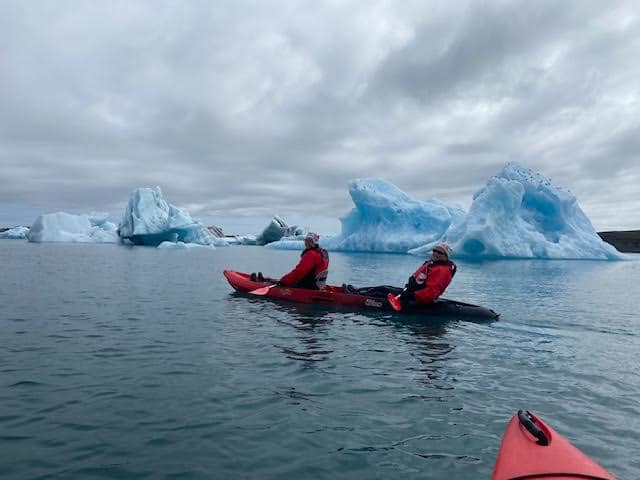
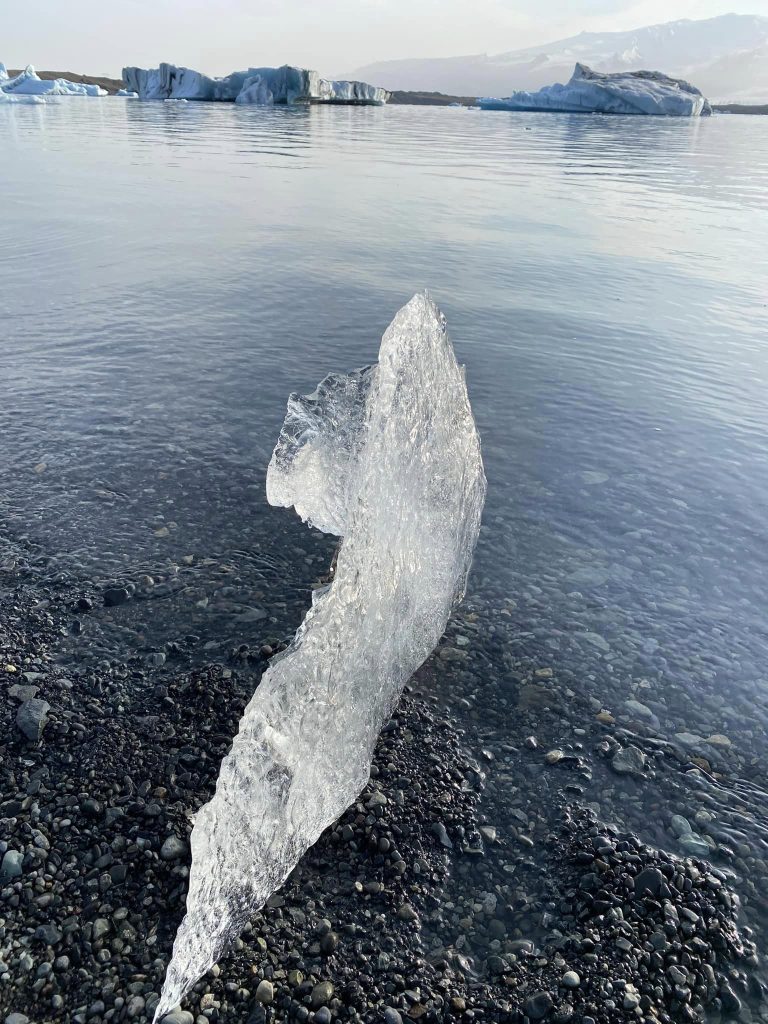
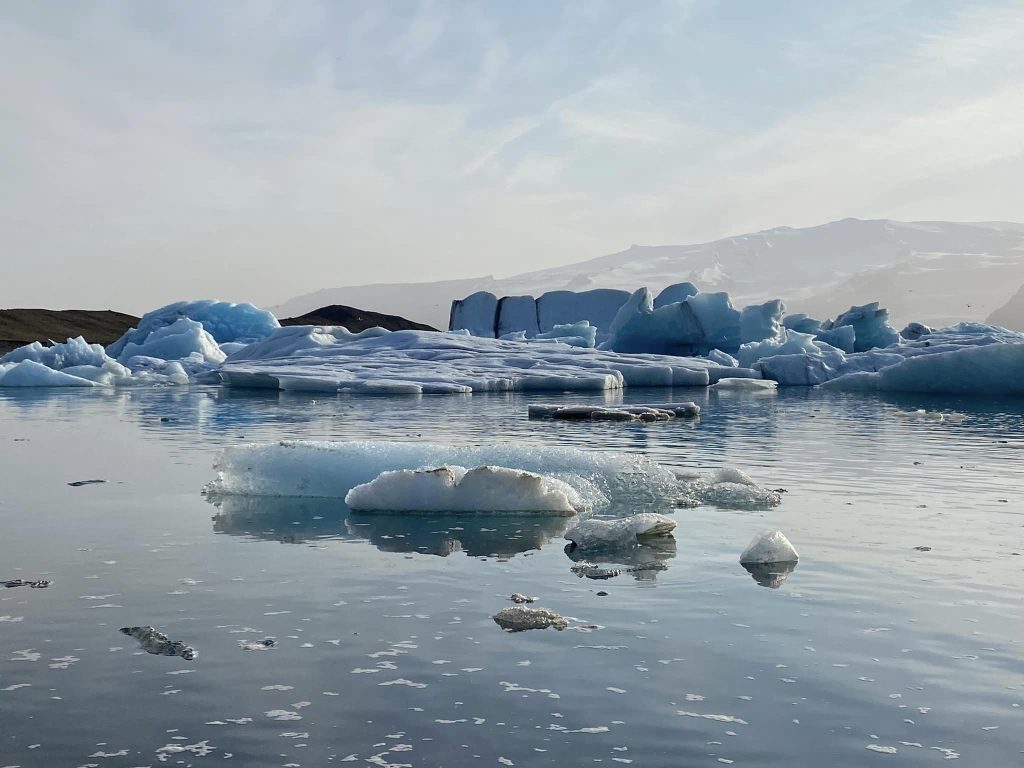
The highlight of day four (and one of the highlights of the trip in general) was kayaking in the Jokulsarlon glacier lagoon. The lagoon itself is full of icebergs that calve off the nearby glacier, and it’s truly one of those things that you have to see in order to absorb how unique and gorgeous it is. We booked this tour (there’s only one company that does it) several months ago, which turned out to be a good idea because the guide told us they were booked through August as of June 1.

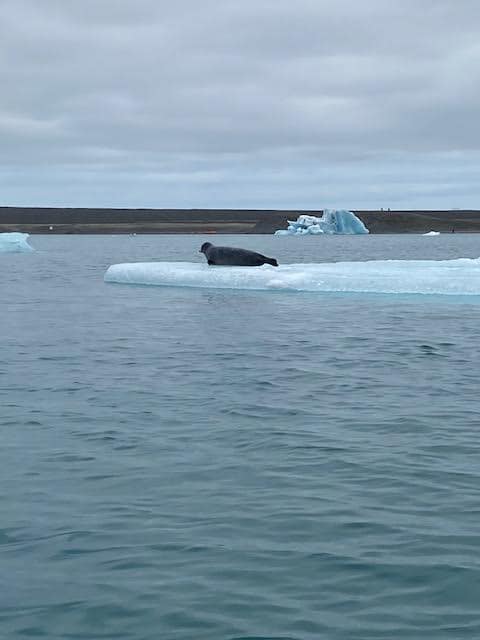
The kayaking is in a group of about 10 people, the outfitter provides protective clothing (rain top and rain pants that you wear over your own clothes, plus rubber boots), and then you go out on the lagoon in sit-on-top kayaks (mostly doubles but also some singles) for about an hour. Our guide grew up in the area near the lagoon and was really great, telling us about the glacier environment and how the icebergs move through the lagoon. There are tons of seals in the lagoon (we all agreed that whales would be even cooler!!) and we were lucky enough to see one lounging on a floating iceberg. This was truly a bucket list experience; highly recommended!

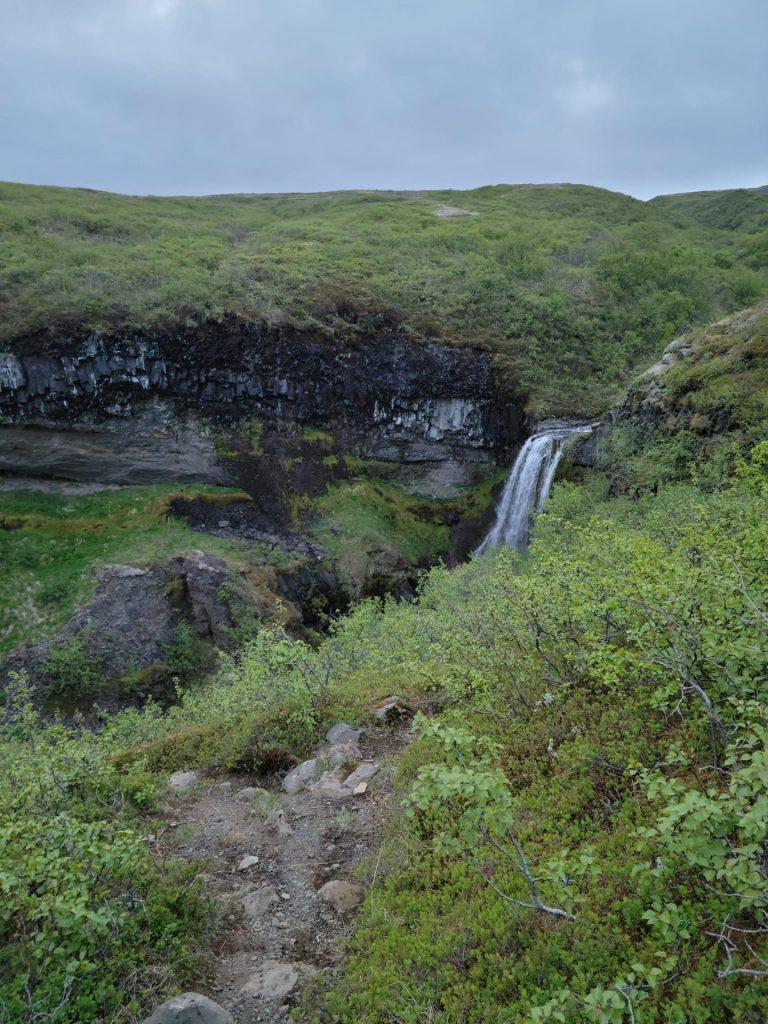
After kayaking, we went across the road to Diamond Beach (where the icebergs eventually wash up as they head out to sea), and then took a really nice waterfall hike from the campground.

Day five: Puffin tour

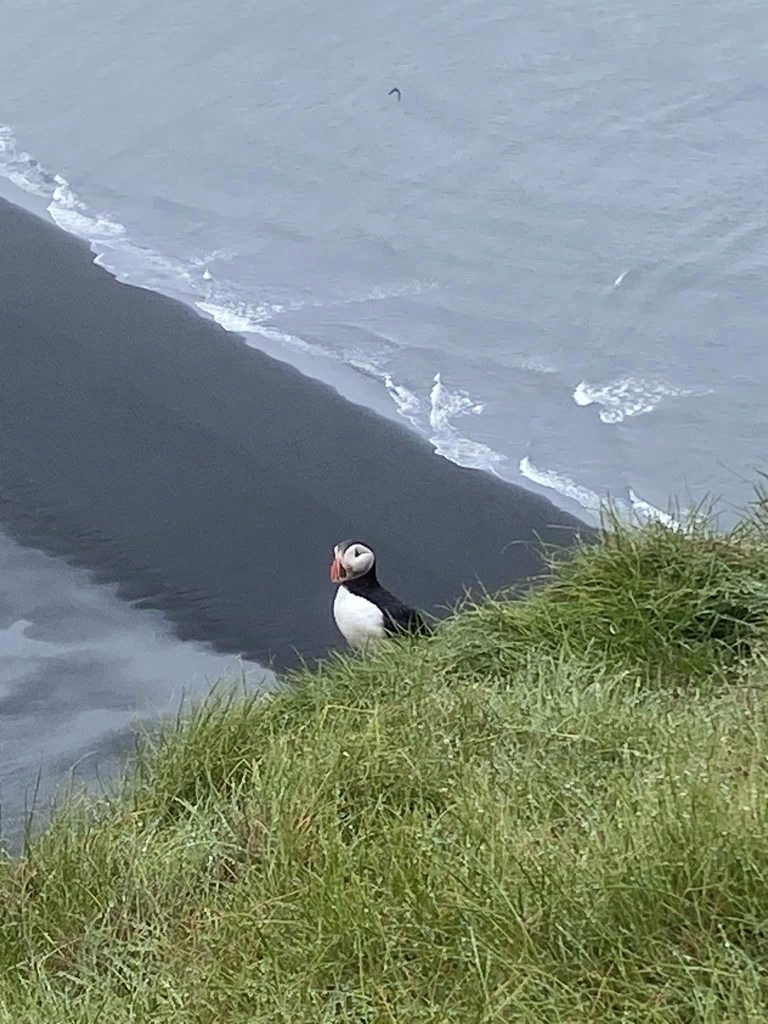
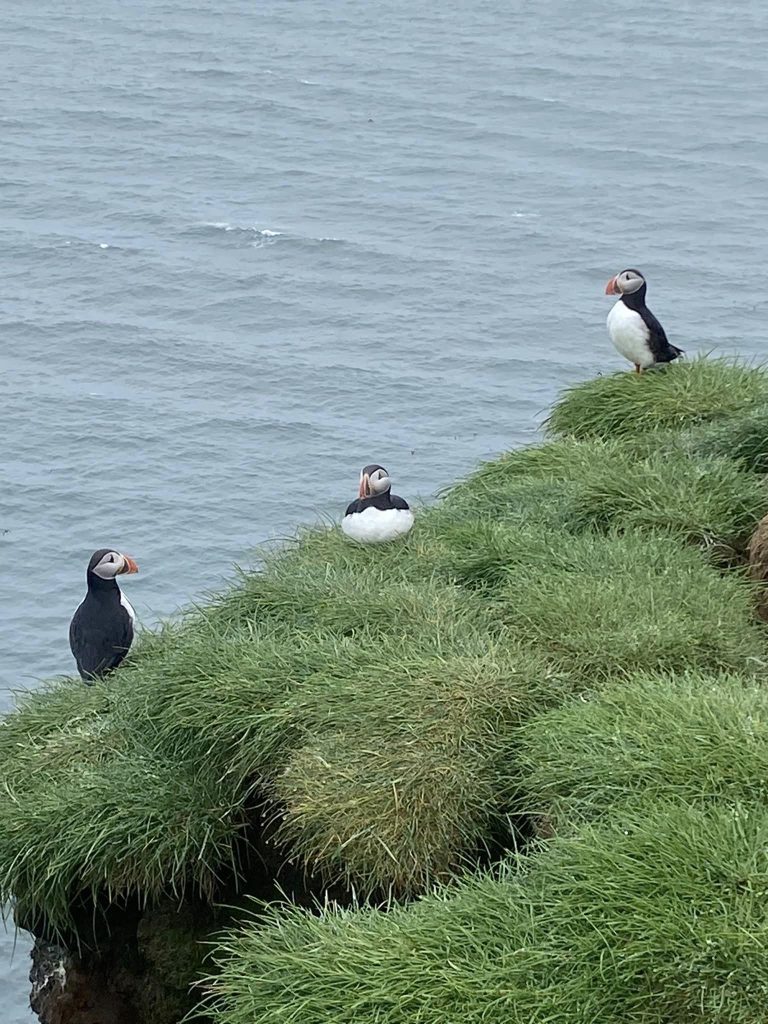
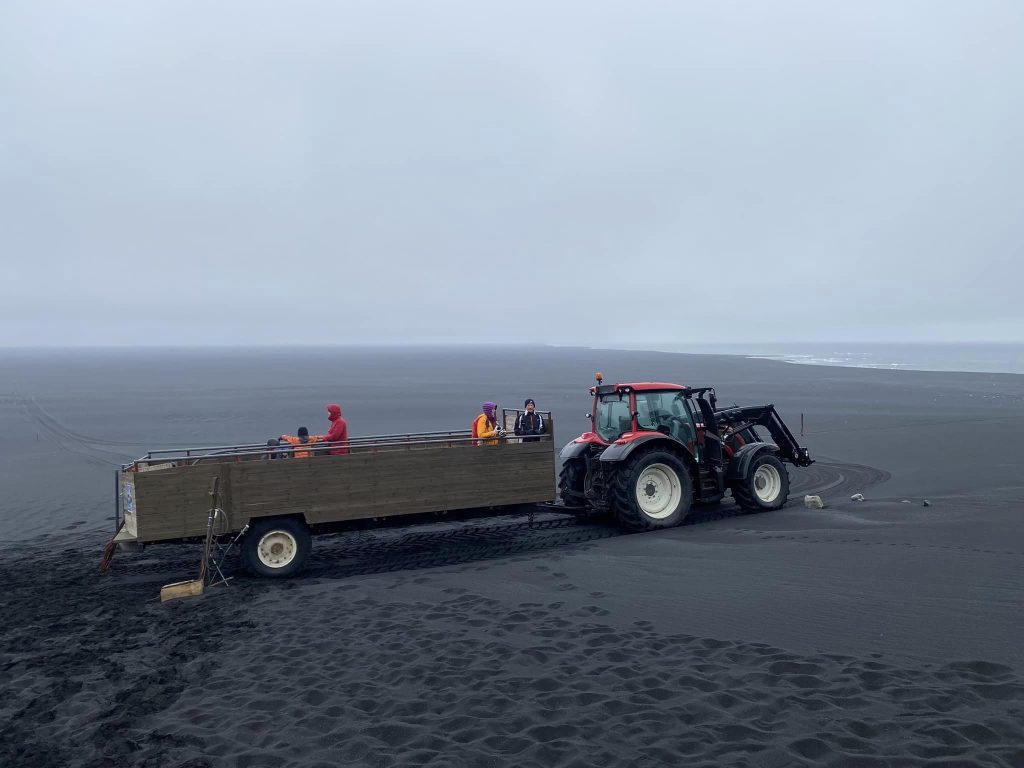
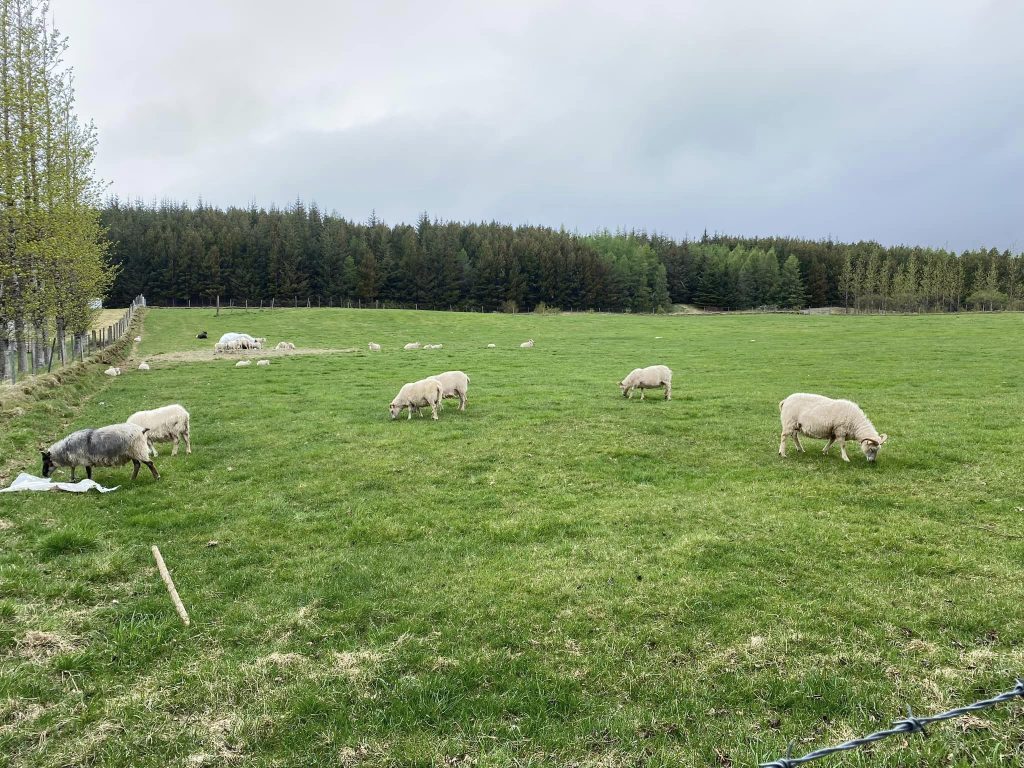
I’m not that much of a bird person and had no idea that puffins lived in Iceland, but it turns out that there are numerous puffin colonies on the southern coast. One of our original ideas for the trip had been to drive the entire ring road, but between the cost of gas (~US $10 a gallon) and the amount of driving versus doing fun stuff, we changed plans and decided to do a puffin tour. This very cool tour started with being pulled in a wagon behind a tractor across the volcanic tidal flats, to the headland where the first settlers of Iceland landed in 874. We then hiked out to three different puffin colonies (they’re totally unbothered by people and live in burrows up to five feet deep!), and also saw skua (huge brown predatory gulls), and a herd of free-ranging sheep. All of us really loved this tour! Afterward, we headed back to Vik, where we took a dip in the hot tub at the public swimming pool and then camped at the in-town campground.

Day six: Waterfalls!

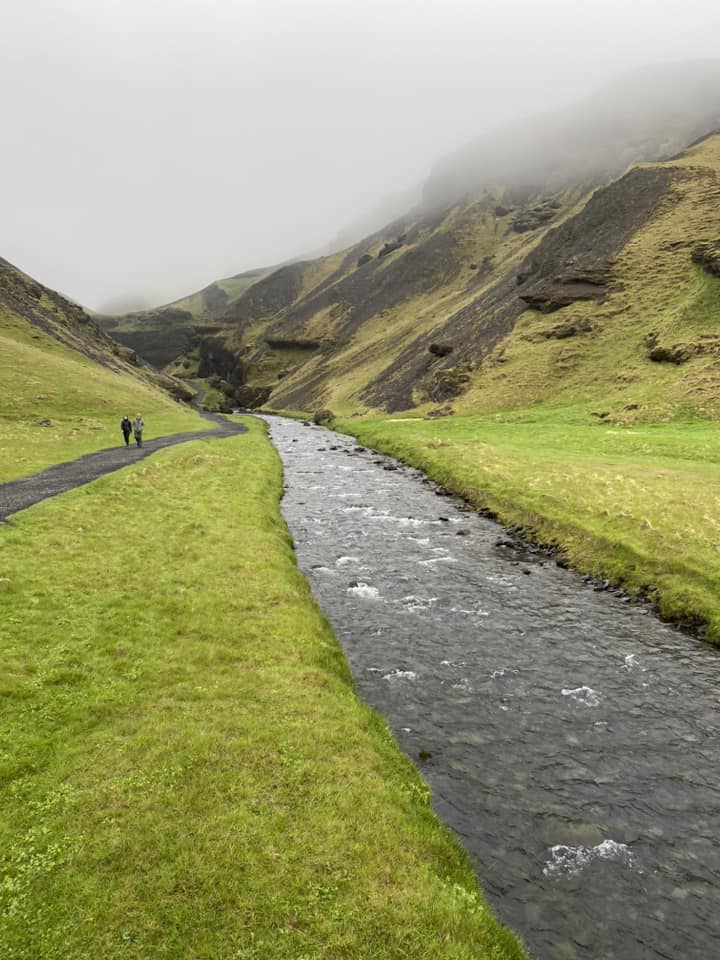
On day six, we visited two huge waterfalls between Vik and Reykjavik on the southern coast: Kvernufoss (totally cool, you can walk behind it) and Skogafoss, and then headed back to Reykjavik. We capped off the day with a sunset (not that the sun really sets, but it does dip toward the horizon) visit to the Sky Lagoon, a geothermal infinity pool on a point in Reykjavik harbor, where we did the “7-step purification ritual,” including baking in a glass-walled sauna looking out over the ocean. The Sky Lagoon is pretty new, and it’s a very impressive facility, also less expensive than the Blue Lagoon.

Day seven: Reykjavik

We spent our last night at Reykjavik Campsite, a nice campground right in the city (next to the soccer stadium) which also has nice facilities: large bathrooms, a place to wash dishes, an indoor area to cook and eat if you’re in a tent, shelves to swap food and clothing, etc.

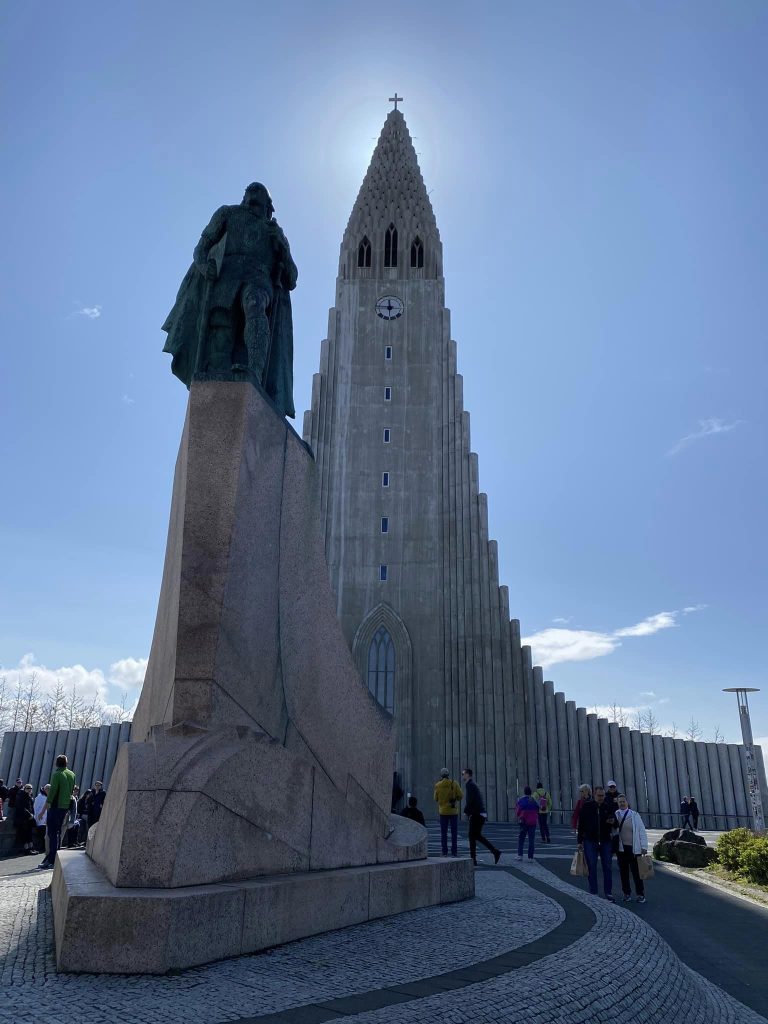
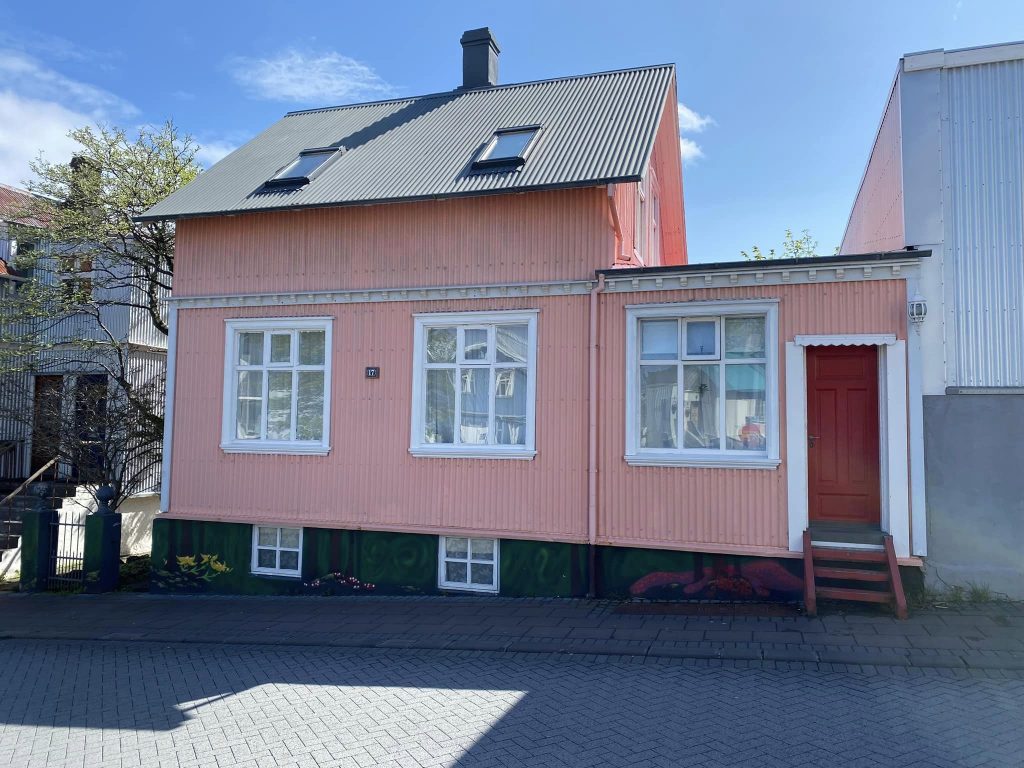
The next morning, we toured around Reykjavik (if you’re in an RV, we recommend the parking lot at the large public hospital near the main church downtown, it’s not expensive and is much easier to navigate than street parking). We had great weather and it was fun to just walk around and check out the city. Reykjavik isn’t huge; unless you’re really into shopping or you go to a museum, you can see the main sights in a couple of hours. We visited a great bakery and then had lunch at the food hall in the old post office, then returned the RV and went to the airport after a truly perfect trip!

Observations on travel in Iceland (in no particular order)

Ease of travel: At least in the areas we visited, Iceland is a very easy place to travel. Everyone we encountered spoke some English, roads are easy to navigate, drivers are courteous and the speed limits are low (maximum 90 km/h) so the driving is not stressful, although you do need to either rent a vehicle or go with a tour; there’s really no public transportation between towns.

Vehicles: Most vehicles in Iceland are manual transmission/stick shift. In fact we were not able to find any RVs that were automatic transmission, so if you can’t drive a stick shift, make sure to get a confirmation in writing from the rental company that you’ll get an automatic.

Costs: Not surprisingly (since everything is imported), Iceland is an expensive destination. We didn’t stay in any hotels, but food was probably about 50% more expensive than in the US. Our rule of thumb was that basically any lunch item in a cafe or restaurant (veggie burger, pasta dish, soup and bread) was about US $20.

Campgrounds: We had a very positive experience RV camping in Iceland. Every campground we stayed at was very clean (almost obsessively clean as compared to campgrounds in the US) and well-maintained. None of the campgrounds outside Reykjavik took reservations, which is kind of a plus/minus. It was nice to have a flexible itinerary, but once you arrive at the campground, there is no way to stake out a spot without leaving your vehicle there, so if you aren’t occupying your spot, you lose it, and I think that in July and August, campgrounds could be extremely crowded. As compared to US campgrounds, the Icelandic campgrounds also don’t have a lot of (or in some cases, any) amenities. No stores or restaurants (theoretically the Vik campground has a coffee shop, but it was closed when we were there), no place to buy food, and in many cases nowhere to cook or eat inside if you’re tent camping.

Food: Icelandic food isn’t anything super creative or exciting in our experience, but we all felt that the ingredients were very high quality and there were lots of vegetarian/vegan/gluten-free choices. Even in the touristy locations, the food was homemade and very tasty.

Finding places to stay and eat: As I mentioned above, the Icelandic tourist infrastructure (at least by the standards of the US and Western Europe) drops off pretty precipitously once you leave the greater Reykjavik area. Many moderate-sized towns have few or no restaurants or hotels, and even gas stations don’t always have stores associated with them. On the southern coast, Vik has a cafe and a couple of restaurants, but I would definitely not go to Iceland without knowing where you’re going to stay (rent an RV or make hotel reservations well in advance), and even if you have your own place to cook, you need to plan where you’re going to buy food, because many small towns have no supermarkets, or have only a small convenience store. We stocked up whenever we drove by a Kronan (the main large supermarket chain), and we generally cooked breakfast and dinner in the RV and ate at cafes or restaurants for lunch.

Money: Iceland is basically cashless; I can’t even tell you what Icelandic money looks like, because we used no cash at all on our trip. Even small campgrounds, roadside food trucks, etc. have credit card readers, so cash is really not necessary, but make sure that you have a credit card with no international transaction fees.

The Icelandic tourism boom: Everywhere we went, the guides of the activities we did mentioned “the Icelandic tourism boom” of the last decade. During our trip (early June), nothing was unpleasantly crowded, but there were a fair number of people everywhere, and given that high season is July and August, I think that things could get quite packed during that time. The tourist services infrastructure is not huge compared to the number of people who visit Iceland: even during our “shoulder season” visit, many of the parks and recreation areas had long lines for bathrooms, food, etc., so this is something to factor into your travel plans.

Visiting as a stopover or a standalone trip: Icelandair is well known for its free stopover policy, where you can fly between the US and Europe and spend up to seven days in Iceland with no increase in airfare. Eve had done this twice and enjoyed it, but all of us felt that there’s a big advantage to doing a standalone trip, namely that you can take the right clothing and gear for the Icelandic weather. It was in the mid-50s Fahrenheit during our trip, most days a bit misty, some actual rain, a fair bit of wind, and a fair bit of sun. But even when it’s sunny, the sun when you’re that far north is not very powerful, so it’s still fairly cold, I’d say more like our late fall or early spring in Colorado. However, this is manageable if you have the right clothing: we brought fleece jackets and pants, raincoats and rain pants, insulated hats and gloves, and waterproof hiking boots, so we were really never uncomfortable. It’s a lot harder to justify bringing that much stuff if you’re on the way to or from Europe where it’s going to be hot summer weather, so we all really appreciated doing Iceland as its own trip with the right gear.

Corinne McKay (classes@trainingfortranslators.com) is the founder of Training for Translators, and has been a full-time freelancer since 2002. An ATA-certified French to English translator and Colorado court-certified interpreter, she also holds a Master of Conference Interpreting from Glendon College. For more tips and insights, join the Training for Translators mailing list!
Written by Corinne McKay · Categorized: Off topic

May 07 2019
Corinne McKay

Travel: Applying for and using Global Entry/TSA PreCheck

Off-topic here, or perhaps not, since translators and interpreters do tend to travel a lot! This applies only to US residents, so feel free to ignore it if you’re outside the US.

Since I joined the ATA Board in 2012, I’ve been meaning to apply for TSA PreCheck. By the time I got around to applying (in 2018…sometimes it takes me a while!), I decided to just apply for Global Entry (which includes TSA PreCheck eligibility…more on that below) since I’ll have more international travel flexibility by the time I rotate off the ATA Board in October.

You can read about the specific benefits of these programs at the links above, but essentially they allow you to pay a fairly minimal fee ($85 for five years for PreCheck, $100 for five years for Global Entry including PreCheck), and if approved, you get to:

  • Go through a special expedited security lane at the airport (if available…more on that below)
  • Not have to remove your liquids or electronics from your suitcase for screening
  • For Global Entry, potentially use expedited lines when you arrive in other countries, and use electronic passport readers when you return to the US

Many people wonder whether these programs are worthwhile, so here’s my experience. If you want the TL:DR version: I think they’re definitely worth it if you travel more than a few times a year, or if you have specific needs (again…more on that below). To me, the only negative is that the application process is long, and you have to go to an in-person interview at an airport, which can be more or less inconvenient depending on where you live.

My application story: after I submitted my Global Entry application online, I was pretty quickly upgraded to the stage where you go for an in-person “interview.” However the soonest interview appointment at the Denver airport was eight months later. Yes, you read that correctly: eight months. There are other options if you’re in a hurry or want the status for a specific trip. For example I could have gotten an appointment as quickly as one week later, had I been willing to drive about six hours to Albuquerque, New Mexico. Or I could have tried to schedule an appointment in another city where I was flying anyway. However I just waited, and finally did my “interview” eight months later.

The “interview” is basically just an appointment where you are electronically fingerprinted. Having gone through the application process to become an FBI Contract Linguist back in the day, I expected…I don’t know…a polygraph or lots of invasive questions or something like that. I arrived about 20 minutes early for my interview, and was already back in my car by the time of my original appointment. It was that fast. And I had my approval before I got home. Super simple. The golden ticket here is your PassID/KTN (Known Traveler Number), a nine-digit number that you enter when you purchase a plane ticket, so that you will get a PreCheck boarding pass.

Since getting approved for Global Entry, I’ve used it five times, on four domestic trips and one international. Here’s how it’s gone so far.

  • Overall, the PreCheck security lane is much faster and much less annoying; you’re exempted from the first-world inconvenience of having to take your shoes off, extract your computer and toiletries, reassemble everything on the other side of security, etc. In the Denver airport, I’m normally through security in under 10 minutes. Sometimes under five minutes. Another special use-case–I notice this only because my husband has a pacemaker, which always creates drama in the security lane–for whatever reason, most of the PreCheck lanes seem to have old-fashioned metal detectors, rather than millimeter wave machines. So if you have a reason for avoiding the millimeter wave machine, PreCheck could solve that.
  • One caveat: PreCheck isn’t always an option at smaller airports. In just four trips, I’ve encountered this twice. Monterey, CA doesn’t have a PreCheck lane at all, and in Austin, TX, it was closed due to lack of staff. With a PreCheck boarding pass, you (for reasons I don’t really understand) are allowed to keep your shoes on in the regular lane, but you have to take your electronics and liquids out of your bag.
  • The jury is still out on the benefits of Global Entry when you return to the US. I’ve only done this once, so take this with a grain of salt. When I returned from a trip to Switzerland, by far the shortest line was for those using the Mobile Passport app, which has nothing to do with Global Entry. It’s just a secure app where you enter your passport information and travel details before you get off the plane; in Denver, people were even encouraged to download the app while we taxied to the gate. I had both Mobile Passport and Global Entry, so I chose Mobile Passport.

Additional notes:

  • I’ve read two negatives about PreCheck, both of which seem to be true: 1) You can be randomly excluded for a specific flight, and there is no way to appeal that. You just have to go through the regular lanes. And 2) Any airport can randomly select people to go through PreCheck if the regular lanes are crowded. The hitch is that those randomly-selected people often don’t know how the PreCheck lanes work, which holds things up. Not significant negatives, but worth mentioning.
  • Global Entry and TSA PreCheck benefits do not extend to family members traveling with you, even kids. However, on one of the trips I’ve taken since I got Global Entry, my 16 year old daughter was traveling with me, and she did get a PreCheck boarding pass even though she doesn’t have PreCheck status. Don’t take that as being likely, but it did happen to us.
  • There seems to be confusion about whether Global Entry includes PreCheck, and the Global Entry website seems to use deliberately vague language about this, saying you are “eligible for PreCheck benefits” if you have Global Entry. My understanding is that you will get PreCheck status if you have Global Entry, but you must enter your Known Traveler Number when you buy the ticket. The TSA officer told me that sometimes, people think that you can just show up at the PreCheck line and show your Global Entry ID card, which is false. The ID card doesn’t give you that status: PreCheck has to be indicated on your boarding pass. But if you enter your KTN, you should get a PreCheck boarding pass.
  • At the Denver airport, the shortest line of all is usually the CLEAR lane. CLEAR is a private company whose service ($179 a year) allows you to skip the identity verification step of security screening and go directly to the baggage screening lane. To me, CLEAR seems like it could be fantastic (if you fly frequently between any of the 28 airports that offer it) or totally worthless (if your home airport doesn’t have it). CLEAR also works at some large sports arenas, so could be worth checking out if you patronize those, but otherwise it’s a pretty expensive alternative to PreCheck.

So far, I’m really happy with PreCheck and wish I had applied for it several years ago. Readers, any positive or negative experiences here?

Written by Corinne McKay · Categorized: Off topic · Tagged: Global Entry, TSA Pre Check

Sep 24 2018
Corinne McKay

Travel: Hiking tour of Switzerland’s Bernese Oberland

This is an off-topic post; just a subject I felt like writing about, and that might be of interest to some readers. Long story short, I needed to travel to Switzerland before the end of the year for administrative reasons, and because school in Colorado starts in mid-August, my husband and daughter couldn’t come along. A Swiss friend clued me in to what turned out to be an incredible “trip within a trip”: Sunstar Hotels’ hiking tour of the Bernese Oberland. I did the four-day trip from Wengen to Meiringen, and it was, how shall I put this…HEAVEN. Basically. In addition to factors that might not apply to everyone’s experience (perfect weather, and I love hiking), I was very impressed with the quality of this tour, given that I’m always a little wary of package tourism. Even if you hate hiking, you should do this trip and just take the train or bus…seriously! Here’s how it went:

After some time in Bern visiting friends, I took the train from Bern to Wengen, using the ticket voucher that Sunstar provides as part of the tour. This involved a standard train from Bern to Interlaken, and then a very cool cog train from Interlaken to Wengen:


With a view!


My room at the Sunstar hotel in car-free Wengen was right on the main (pedestrian) drag, a short walk from the train station. One thing that’s unique in Switzerland (or at least compared to the US): hotel rooms for one person, with a twin bed. I kind of liked this; since I rarely go anywhere without my family, it added to the “girl on an adventure” feel of the trip. I settled in, had an Orangina on my balcony and took a walk around Wengen before dinner. Wengen is chock full of the kinds of contrasts you often see in Switzerland, like a pair of sheep “mowing” the grass in front of a store that sells $10,000 watches. Dinner (included in the tour) at the Sunstar restaurant was delicious, and they had no problem accommodating the fact that I’m a vegetarian (hello rösti potatoes!).

The next morning, I had breakfast at the hotel (buffet included; it was great) and headed out early for the hike to Grindelwald. Meanwhile, the hotel desk clerk tagged my bag so that it could ride the train to the next destination (luggage transportation also included), which allowed me to carry just a small day pack with water, snacks, and a jacket. I wanted to walk the longer but more scenic route under the north face of the Eiger, which I (correctly) anticipated might take a while. So, before the sun peeked over the ridges, I was off up the hill:


About two hours later I topped out in the mountain base hamlet of Kleine Scheidegg, then traversed under the impressive and foreboding Eiger Nordwand.


The trail continued down, down, down, the valley toward Grindelwald, and after five to six hours of walking, I was getting ready for a break. Here in Colorado, that would probably involve eating a protein bar while perched on a rock by the trail (not that there’s anything wrong with that). But hey, this was Switzerland, and around a bend in the trail appeared this charming little alpine cafe. 
I enjoyed a fresh-pressed apple juice while taking in the view, then walked about another hour down into Grindelwald, where I checked in to the Sunstar hotel at the upper end of town.


My suitcase–having enjoyed the cog train ride from Wengen–was waiting for me in the cutest little hotel room you can imagine, with an Eiger-shaped bed headboard.
The Sunstar Grindelwald was probably my favorite hotel on the tour: it has a fabulous indoor swimming pool with huge glass walls that look out at the Eiger, plus a beautiful terrace garden where you can lie on a lounge chair soaking up the mountain splendor while a waiter brings you prosecco. Or if you need to work for a while, which I did, you can do that in their quietly elegant lobby with…you guessed it…yet more Eiger views. You’re probably starting to get the feeling that I didn’t want to leave, which is kind of true… The food here was also excellent, and again there was a vegetarian option for everything, including a homemade veggie burger with a split avocado for a “bun”; just the ticket after walking all day to get there!


After two nights in Grindelwald, it was time to hoof it to the last stop on the tour, Meiringen. This involved crossing the Grosse Scheidegg pass, which–despite its name–is a lot easier to hike over than the Kleine Scheidegg, at least from this direction.


Once over the pass, the hike down into the valley-floor town of Meiringen is more of a walk on a gravel path by a creek; very pleasant and not at all strenuous. I even took the long way down into Meiringen to draw the experience out as much as possible.

The hotel in Meiringen is a “partner” hotel, not a Sunstar, and it was smaller and less luxurious than the Sunstar hotels, with no resort amenities (pool, etc.). However it was very clean and comfortable, the food was fine, and my suitcase arrived before I did. After a night there it was back to Bern with another Sunstar-provided train ticket voucher after a truly relaxing and delightful time in the mountains.

A few logistical notes, based on questions people have asked me, for anyone who’s interested in doing this or a similar trip:

-The Sunstar package includes four hotel nights, dinner and breakfast each day, luggage transfer, and your train ticket to the start and from the finish. There really are no extra costs other than the city taxes in each town, which were less than US $10 per day. You don’t tip, and there’s no surcharge for a single room if you’re by yourself, so this is really an economical trip as far as Swiss tourism goes.

-The Swiss don’t fool around when it comes to hiking. I’m not the fastest hiker but I’m in decent shape and I don’t stop a lot, and each of the point-to-point days took me seven hours total. However there’s the option to take the cog train (Wengen to Grindelwald) or the bus (Grindelwald to Meiringen) if you want to.

-I’m vegetarian and this was no problem; you just have to tell the hotels ahead of time and they will accommodate that. Vegans might have more of an issue, because nearly every Swiss dish contains either meat or fairly copious amounts of cheese and cream sauce.

-I took hiking boots in case of bad weather–I really lucked out with zero rain, but it could have poured the whole time–but you can definitely do this hike in running shoes if the conditions are good.

-Even as someone who is used to going on family vacations, or on work trips where I’m with other people, doing this trip by myself was not weird. The hotels gave me my own table at dinner and I just brought a book to pass the time between courses, and I felt totally safe hiking the trails alone. Again, I do a lot of outdoor activities at home, and there were definitely sections of the trail where I went an hour or more without seeing anyone else out there. My sense is that many or even most people who visit this region take the train between trail sections and do shorter hikes, so you see fewer people on the more strenuous uphills, but I felt totally safe by myself. The trails are so well-marked that you really don’t even need a map, much less GPS.

-Linguistically, I was really surprised at how good the hotel staff’s English was, and how few of them spoke French. Several were even native English speakers (mostly from the UK). Not speaking Swiss German was no problem; I was excited to get some French practice in, but the hotel staff much preferred English.


Written by Corinne McKay · Categorized: Off topic · Tagged: Bernese Oberland hike, Swiss hike

  • Page 1
  • Page 2
  • Page 3
  • Interim pages omitted …
  • Page 5
  • Go to Next Page »

Primary Sidebar

Subscribe to the Training for Translators mailing list!
Getting Started as a Freelance Interpreter: Available now in print and electronic editions

Learn from our blog:

  • Should you raise your rates? Now? How?
  • Why most language company content misses the mark, and a few strategic fixes
  • Struggling in your freelance business? Really, you have four options
  • T4T podcast, episode 30: A summary of my “state of freelance translation” survey
  • Survey results: The state of freelance translation in 2026
  • Focus on the clients who can afford you
  • Upcoming direct client marketing class
  • Travel: Cycling Quebec’s Tomifobia Nature Trail

Search the Training for Translators blog

Copyright © 2026 · Training For Translators · Log in

This website uses cookies to improve your experience. We'll assume you're OK with this, but you can opt-out if you wish. To view this website's privacy policy, click About>Privacy Policy. Accept Read More
Privacy & Cookies Policy

Privacy Overview

This website uses cookies to improve your experience while you navigate through the website. Out of these, the cookies that are categorized as necessary are stored on your browser as they are essential for the working of basic functionalities of the website. We also use third-party cookies that help us analyze and understand how you use this website. These cookies will be stored in your browser only with your consent. You also have the option to opt-out of these cookies. But opting out of some of these cookies may affect your browsing experience.
Necessary
Always Enabled
Necessary cookies are absolutely essential for the website to function properly. This category only includes cookies that ensures basic functionalities and security features of the website. These cookies do not store any personal information.
Non-necessary
Any cookies that may not be particularly necessary for the website to function and is used specifically to collect user personal data via analytics, ads, other embedded contents are termed as non-necessary cookies. It is mandatory to procure user consent prior to running these cookies on your website.
SAVE & ACCEPT