• Skip to main content
  • Skip to primary sidebar

Training for Translators

Classes for translators and interpreters

  • Start here
  • Blog
  • Classes
    • Coaching for freelancers
    • Subscription
  • Books
    • Translate my books
    • Book Shop
  • About/Contact
    • Privacy Policy
  •  
  • Account

Jun 13 2023
Corinne McKay

Travel: A week in Iceland

I took last week off to take a real vacation (my computer stayed home!) to Iceland, with my friend and colleague Eve Bodeux and our mutual friend Ann. We had an amazing time; I had changed planes in the Reykjavik airport many times, but I had never done the Icelandair free stopover, much less taken a real trip to Iceland. Eve suggested Iceland as a destination, Ann suggested renting an RV, and we booked it! By buying the tickets about six months in advance, we paid only ~US $600 each (less than I paid for my daughter to fly from New Jersey to Colorado for winter break!!), so although Iceland itself isn’t the cheapest travel destination, it was an affordable trip overall.

Day one: Arrival, Blue Lagoon, and Thingvellir

We flew nonstop (overnight) from Denver to Reykjavik, arrived at about 6 AM and killed some time drinking coffee in the airport while we waited for the RV rental place to open. We booked an RV through Geysir, and overall we were happy with it. RVs in Iceland tend to be on the older side and ours was no exception, but we were really happy that we had an RV versus staying in hotels and eating in restaurants.

In terms of Icelandic tourist infrastructure, basically there’s the greater Reykjavik area (tons of restaurants, hotels, and tourist services), and then everything else (where the supply of hotels and restaurants drops off precipitously, and some fairly large towns have very few services). Renting an RV allowed us to avoid spending time chasing after places to stay and eat, which was a big win.

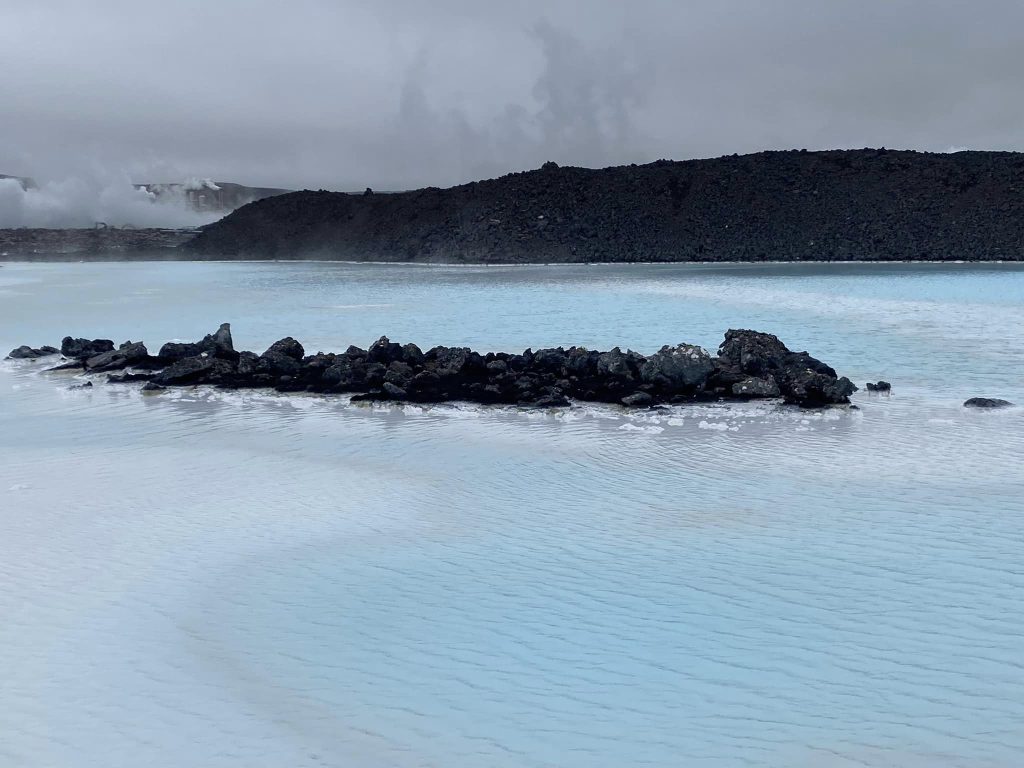
After we picked up the RV, we headed straight to the Blue Lagoon; a geothermal hot spring that is a classic on the Golden Circle tourist trail but/and was also really incredible! We did the basic (Comfort) ticket which was totally sufficient (you get a towel and a drink), and it was really amazing to float in the ice-blue steaming water after being on the plane all night. Call me easy to impress, but I honestly didn’t expect the Blue Lagoon to be that blue; it’s really blue! When we were there, it was not unpleasantly crowded; I was actually expecting it to be more crowded.

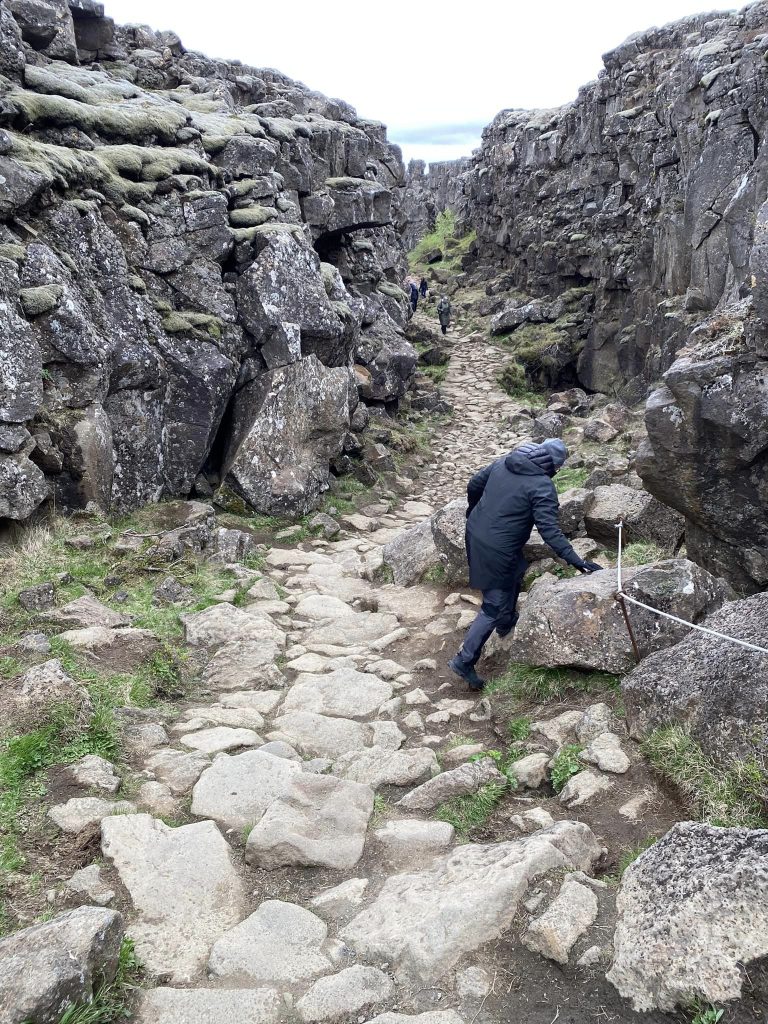
After a couple of hours of soaking, we drove to Thingvellir National Park, a historic site where the Icelandic Parliament met, starting in 930 AD. There’s a nice hike through the park, where you can also see lots of the tectonic plate activity that Iceland is famous for. Admission is free and we spent a couple of hours tramping around. We then headed to the campground by the Faxi waterfall which was very pretty, uncrowded, and had an electric hookup for our camper, plus clean bathrooms and a place to wash dishes. It had been drizzly all day but only started pouring after we were at the campsite!
Day two: The rest of the Golden Circle

On day two, we went to the Geysir geothermal area and the Gullfoss waterfall, both very impressive! As expected, there were more tour bus crowds here, but at Geysir we hiked to the upper observation area where you can watch the Strokkur geyser erupt (very cool!), and then we ate lunch in the Geysir restaurant which was very tasty. You get pretty wet on the observation decks at Gullfoss, so we then warmed up at the Secret Lagoon hot springs, which are smaller but more rustic than the Blue Lagoon. There’s a nice changing room with lockers, and the pool itself is very peaceful and beautiful. We then drove down to the coast village of Vik (vik=bay; Reykjavik=smoky bay) where we got a campsite at Vik Campsite. The campground is right near the center of town, and (as with most campgrounds we stayed in) was around US $40 for three people and an electric hookup. Vik is a cute town right on the water, with a nice cafe and restaurant in the shopping plaza with the supermarket.

Day three: Black sand beaches and glacier lagoon

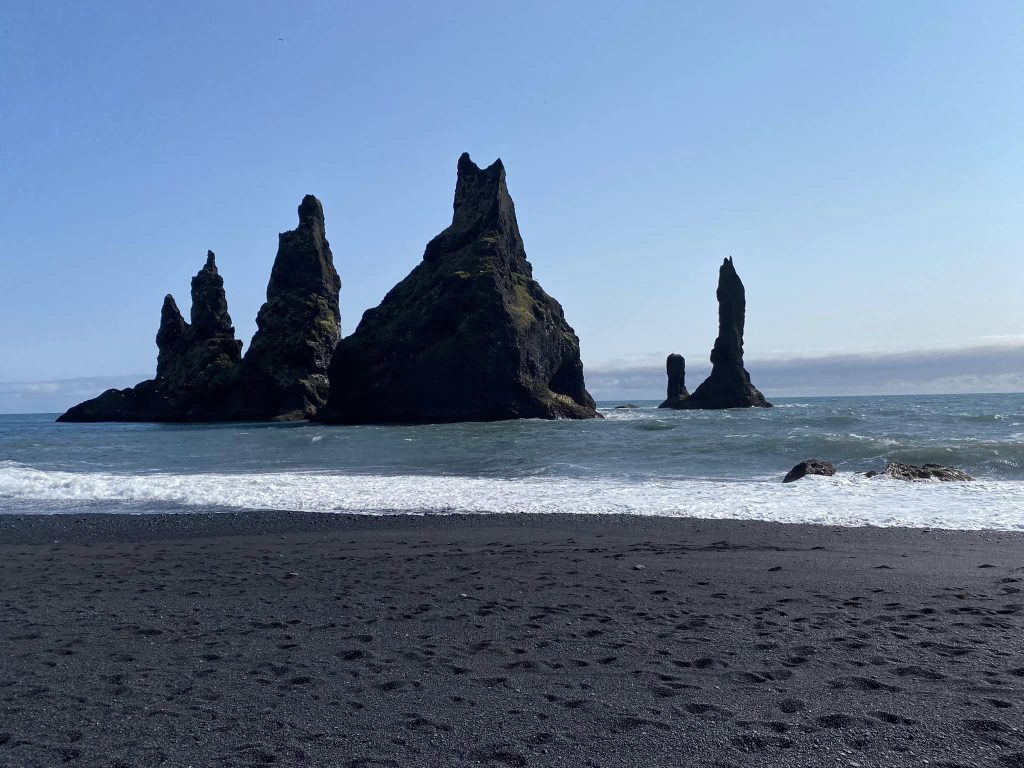
After camping in Vik, we headed to the famous black sand beaches; it’s worth doing this area from two different directions. From the shopping plaza in Vik, you can walk down to the long black sand beach that also has a jetty that you can scramble to the end of. The beach was pretty deserted when we were there (it was sunny but very windy) so we had it pretty much to ourselves to explore. We then drove back toward Reykjavik for about 10 minutes to the Reynisfjara beach side, where you can get right up to the iconic rock formations (basalt) that are in all of the black sand beach tourist photos. The Reynisfjara side is smaller and much more crowded, so we were glad we did both angles! We then drove to the Jokulsarlon glacier lagoon, (more on that below) which was beyond stunning. The closest camping to Jokulsarlon is in the national park in Skaftafell (about 45 minutes back toward Vik), so we drove back there and staked out a campsite at the very nice campground (geothermal hot showers, nice place to wash dishes, several nice hikes right from the campground).
Day four: Glacier kayaking and a waterfall hike

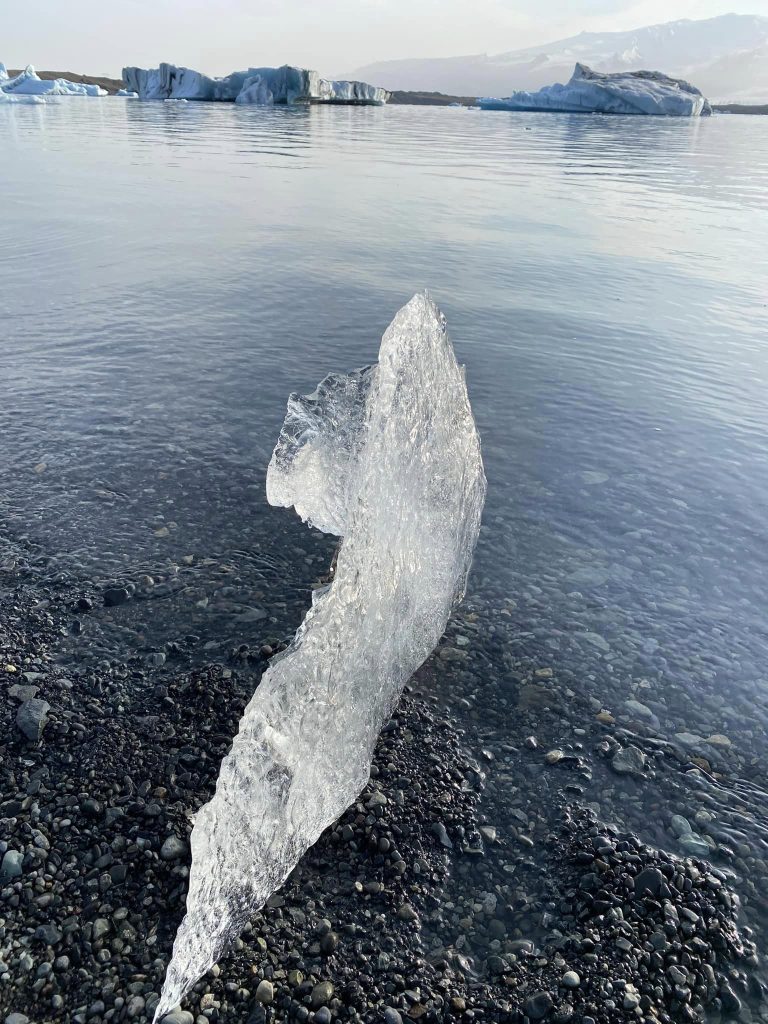
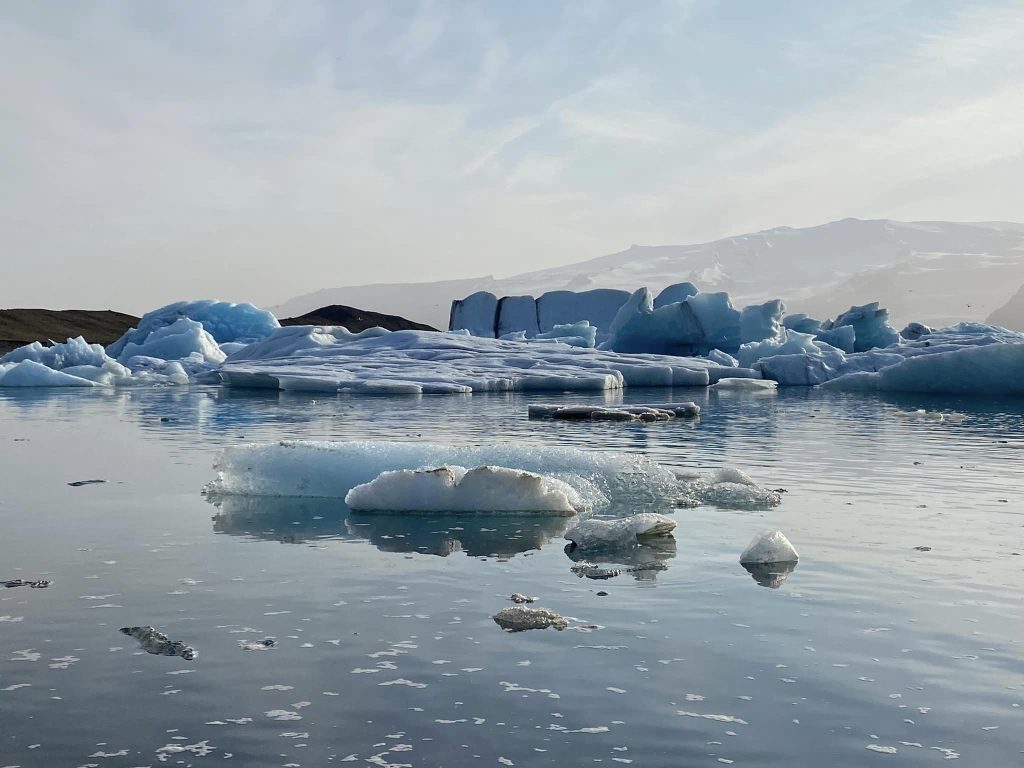
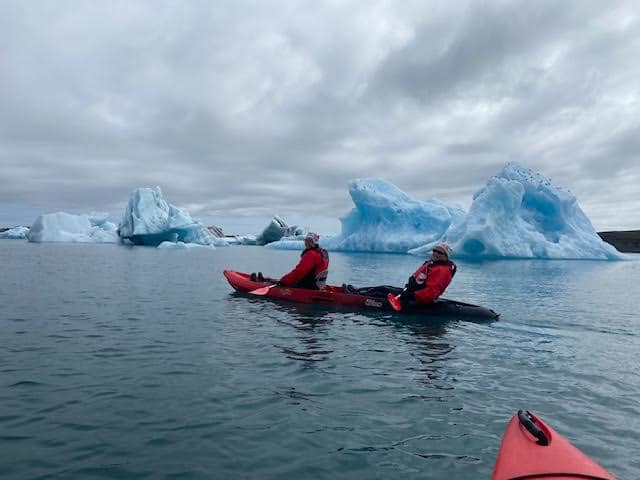
The highlight of day four (and one of the highlights of the trip in general) was kayaking in the Jokulsarlon glacier lagoon. The lagoon itself is full of icebergs that calve off the nearby glacier, and it’s truly one of those things that you have to see in order to absorb how unique and gorgeous it is. We booked this tour (there’s only one company that does it) several months ago, which turned out to be a good idea because the guide told us they were booked through August as of June 1.

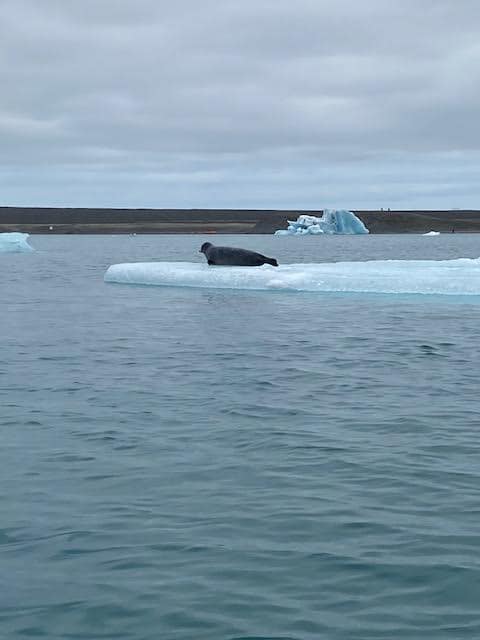
The kayaking is in a group of about 10 people, the outfitter provides protective clothing (rain top and rain pants that you wear over your own clothes, plus rubber boots), and then you go out on the lagoon in sit-on-top kayaks (mostly doubles but also some singles) for about an hour. Our guide grew up in the area near the lagoon and was really great, telling us about the glacier environment and how the icebergs move through the lagoon. There are tons of seals in the lagoon (we all agreed that whales would be even cooler!!) and we were lucky enough to see one lounging on a floating iceberg. This was truly a bucket list experience; highly recommended!

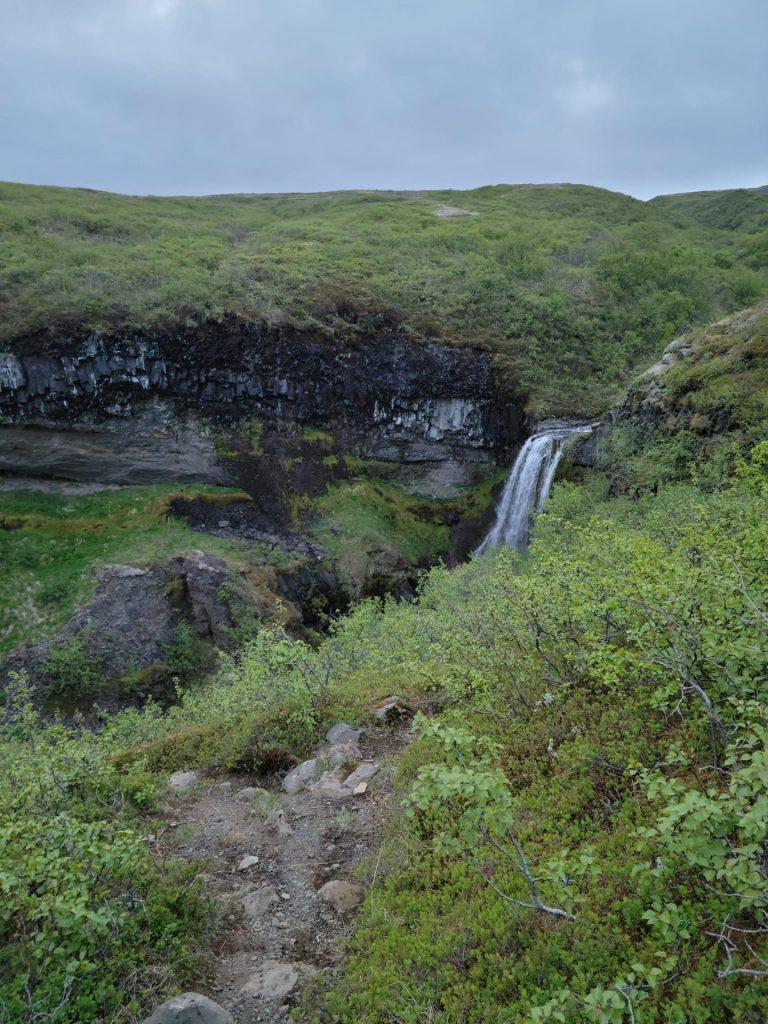
After kayaking, we went across the road to Diamond Beach (where the icebergs eventually wash up as they head out to sea), and then took a really nice waterfall hike from the campground.
Day five: Puffin tour

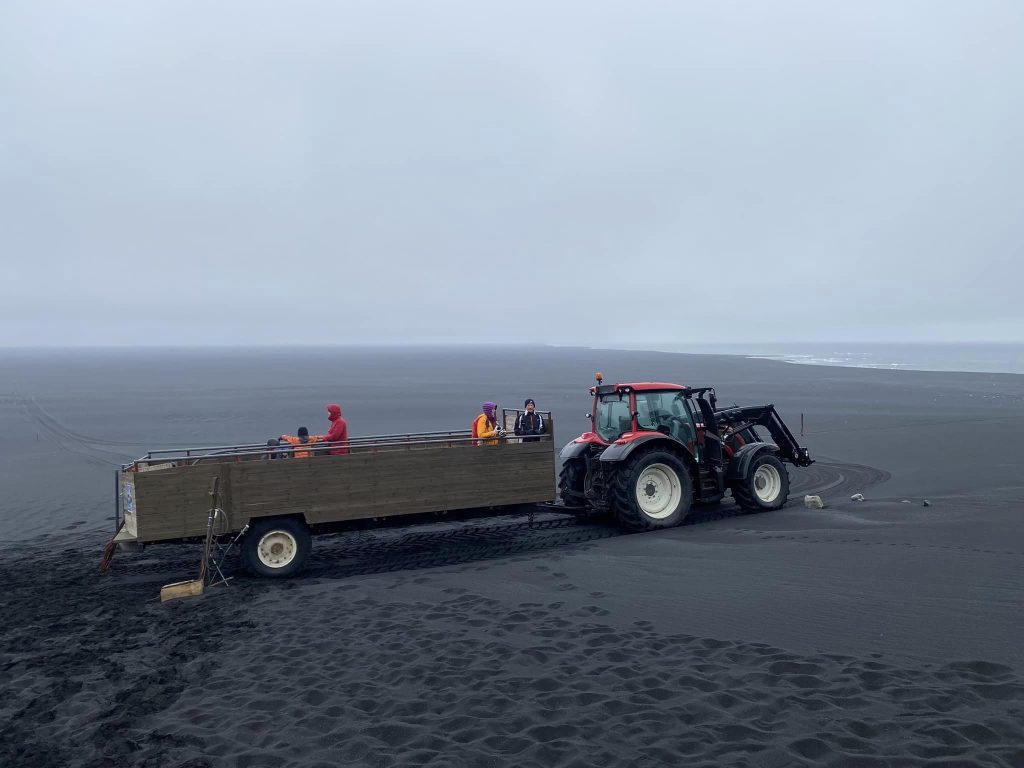
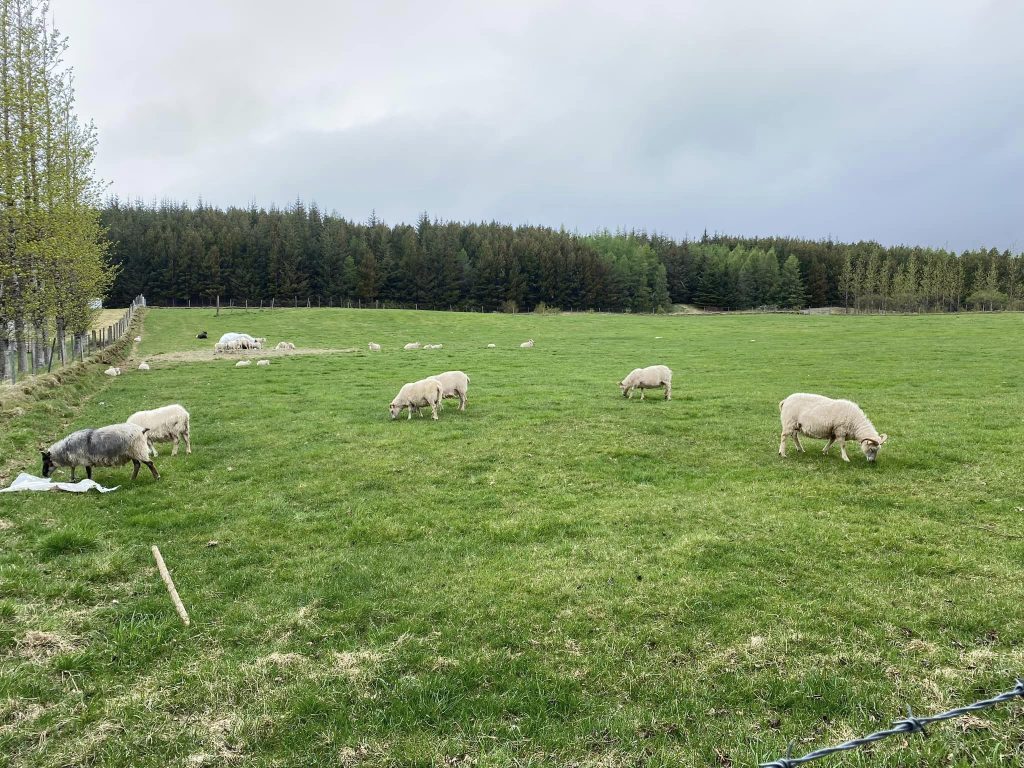
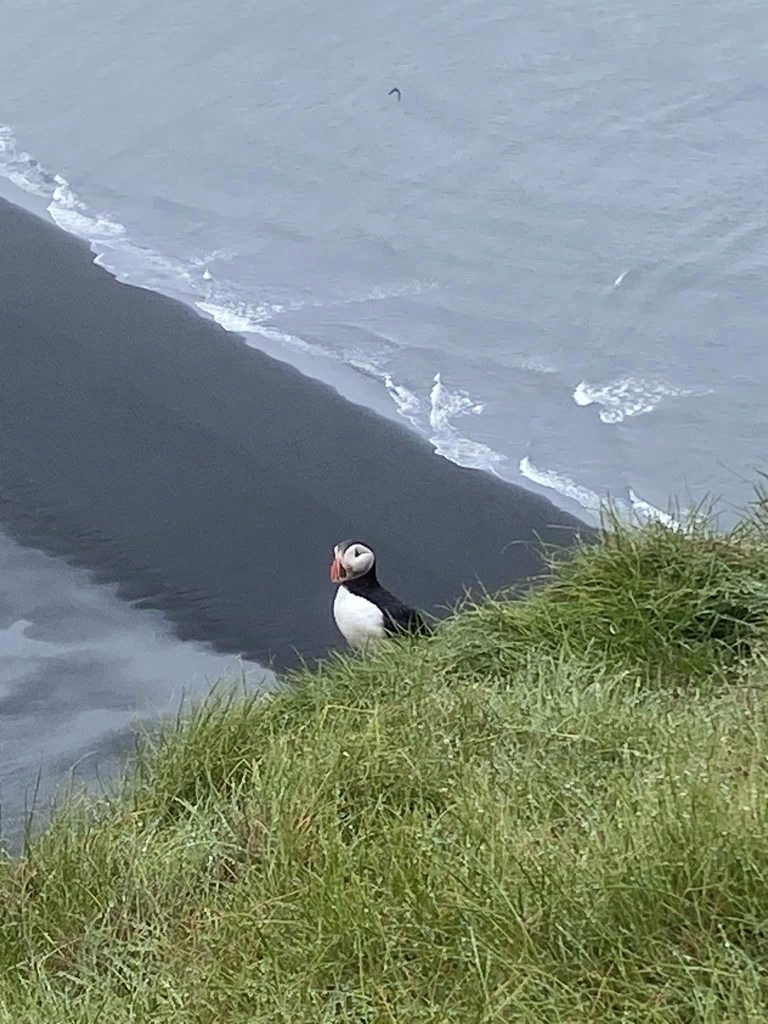
I’m not that much of a bird person and had no idea that puffins lived in Iceland, but it turns out that there are numerous puffin colonies on the southern coast. One of our original ideas for the trip had been to drive the entire ring road, but between the cost of gas (~US $10 a gallon) and the amount of driving versus doing fun stuff, we changed plans and decided to do a puffin tour. This very cool tour started with being pulled in a wagon behind a tractor across the volcanic tidal flats, to the headland where the first settlers of Iceland landed in 874. We then hiked out to three different puffin colonies (they’re totally unbothered by people and live in burrows up to five feet deep!), and also saw skua (huge brown predatory gulls), and a herd of free-ranging sheep. All of us really loved this tour! Afterward, we headed back to Vik, where we took a dip in the hot tub at the public swimming pool and then camped at the in-town campground.

Day six: Waterfalls!

On day six, we visited two huge waterfalls between Vik and Reykjavik on the southern coast: Kvernufoss (totally cool, you can walk behind it) and Skogafoss, and then headed back to Reykjavik. We capped off the day with a sunset (not that the sun really sets, but it does dip toward the horizon) visit to the Sky Lagoon, a geothermal infinity pool on a point in Reykjavik harbor, where we did the “7-step purification ritual,” including baking in a glass-walled sauna looking out over the ocean. The Sky Lagoon is pretty new, and it’s a very impressive facility, also less expensive than the Blue Lagoon.

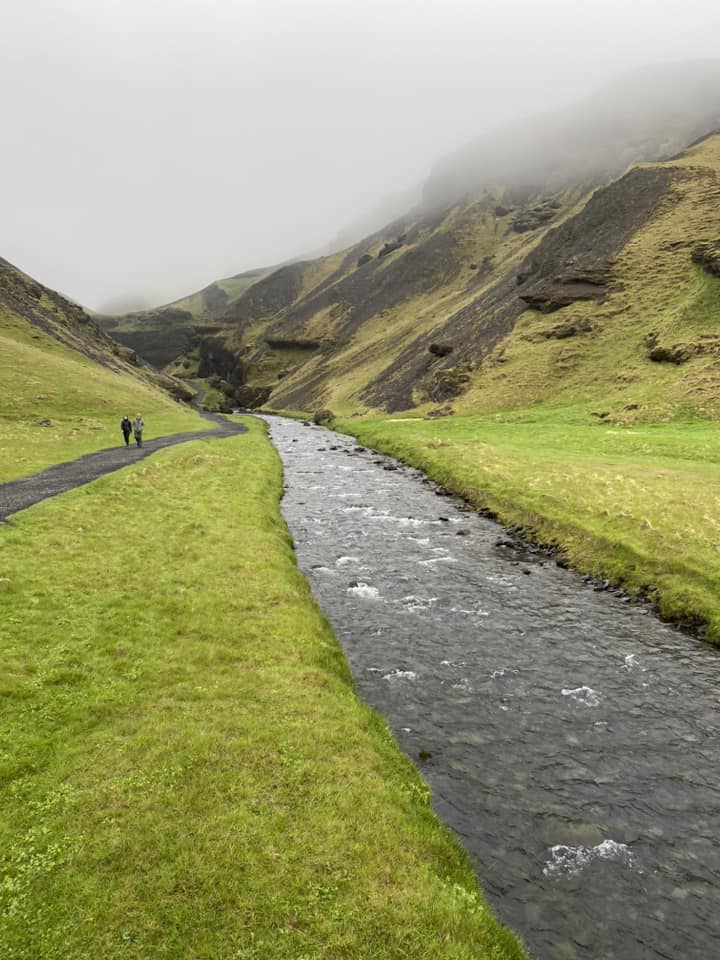
Day seven: Reykjavik

We spent our last night at Reykjavik Campsite, a nice campground right in the city (next to the soccer stadium) which also has nice facilities: large bathrooms, a place to wash dishes, an indoor area to cook and eat if you’re in a tent, shelves to swap food and clothing, etc.

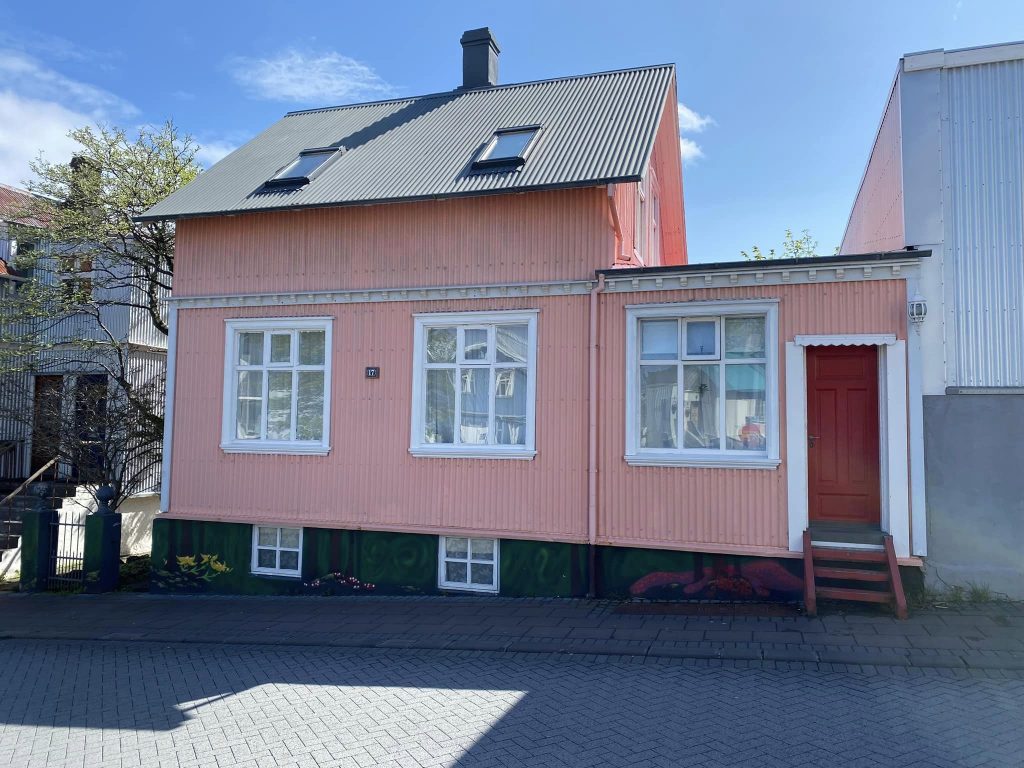
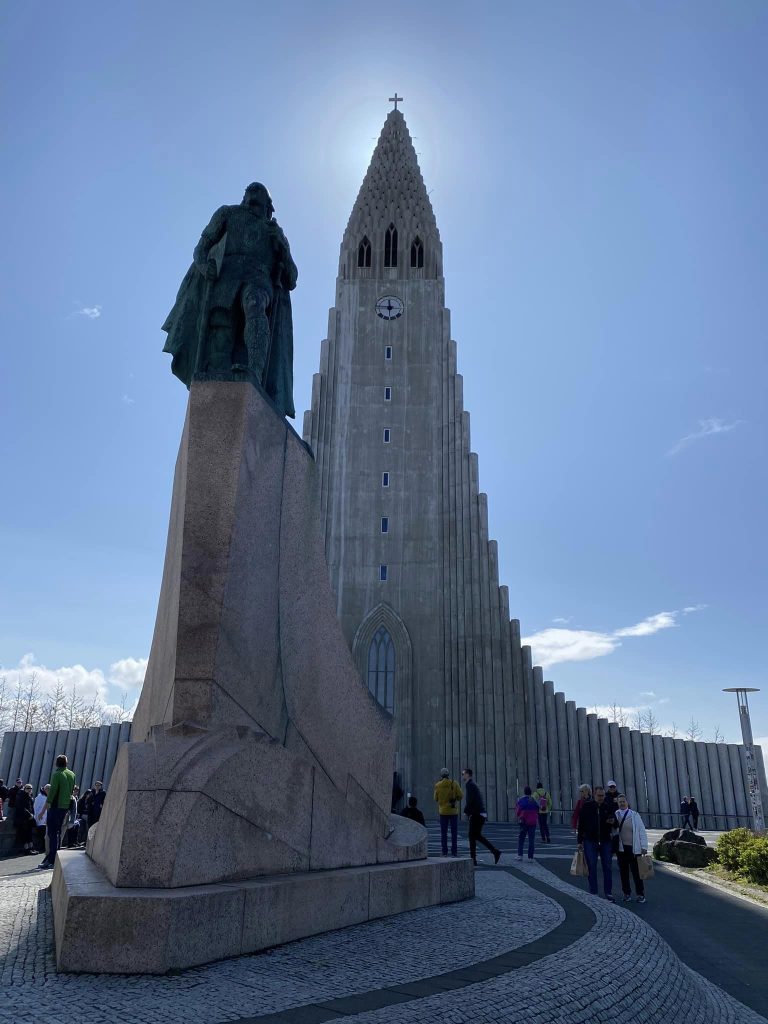
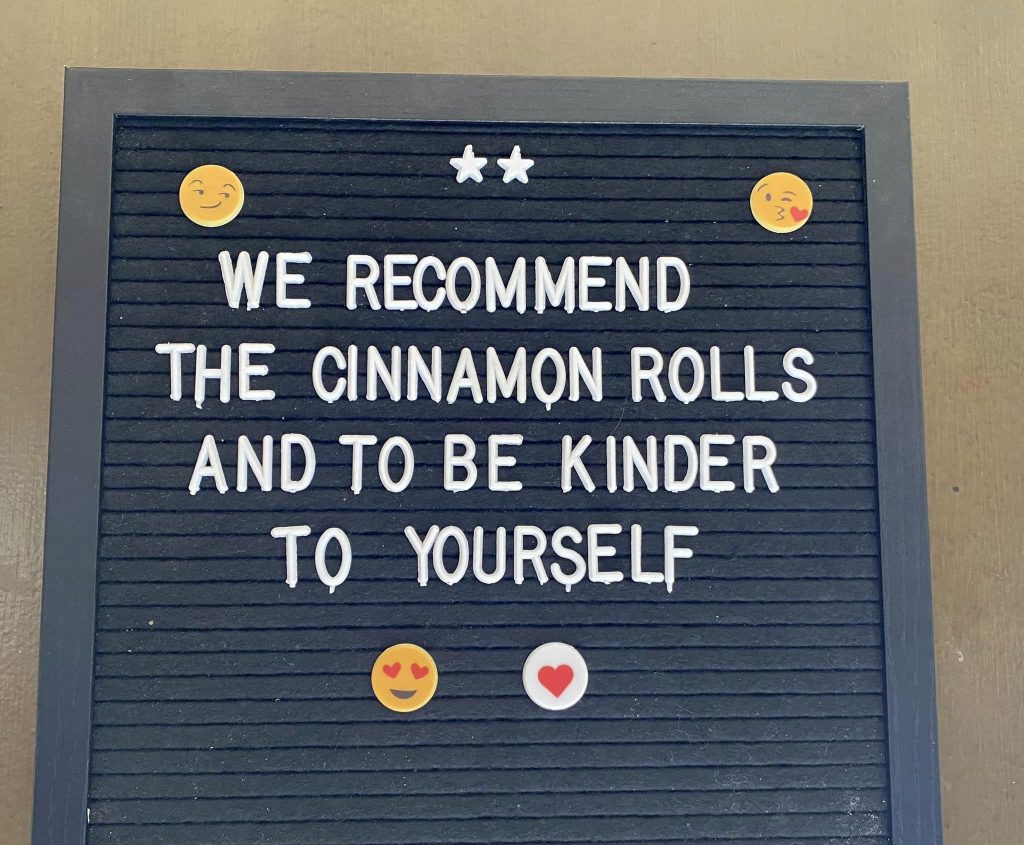
The next morning, we toured around Reykjavik (if you’re in an RV, we recommend the parking lot at the large public hospital near the main church downtown, it’s not expensive and is much easier to navigate than street parking). We had great weather and it was fun to just walk around and check out the city. Reykjavik isn’t huge; unless you’re really into shopping or you go to a museum, you can see the main sights in a couple of hours. We visited a great bakery and then had lunch at the food hall in the old post office, then returned the RV and went to the airport after a truly perfect trip!
Observations on travel in Iceland (in no particular order)

Ease of travel: At least in the areas we visited, Iceland is a very easy place to travel. Everyone we encountered spoke some English, roads are easy to navigate, drivers are courteous and the speed limits are low (maximum 90 km/h) so the driving is not stressful, although you do need to either rent a vehicle or go with a tour; there’s really no public transportation between towns.

Vehicles: Most vehicles in Iceland are manual transmission/stick shift. In fact we were not able to find any RVs that were automatic transmission, so if you can’t drive a stick shift, make sure to get a confirmation in writing from the rental company that you’ll get an automatic.

Costs: Not surprisingly (since everything is imported), Iceland is an expensive destination. We didn’t stay in any hotels, but food was probably about 50% more expensive than in the US. Our rule of thumb was that basically any lunch item in a cafe or restaurant (veggie burger, pasta dish, soup and bread) was about US $20.

Campgrounds: We had a very positive experience RV camping in Iceland. Every campground we stayed at was very clean (almost obsessively clean as compared to campgrounds in the US) and well-maintained. None of the campgrounds outside Reykjavik took reservations, which is kind of a plus/minus. It was nice to have a flexible itinerary, but once you arrive at the campground, there is no way to stake out a spot without leaving your vehicle there, so if you aren’t occupying your spot, you lose it, and I think that in July and August, campgrounds could be extremely crowded. As compared to US campgrounds, the Icelandic campgrounds also don’t have a lot of (or in some cases, any) amenities. No stores or restaurants (theoretically the Vik campground has a coffee shop, but it was closed when we were there), no place to buy food, and in many cases nowhere to cook or eat inside if you’re tent camping.

Food: Icelandic food isn’t anything super creative or exciting in our experience, but we all felt that the ingredients were very high quality and there were lots of vegetarian/vegan/gluten-free choices. Even in the touristy locations, the food was homemade and very tasty.

Finding places to stay and eat: As I mentioned above, the Icelandic tourist infrastructure (at least by the standards of the US and Western Europe) drops off pretty precipitously once you leave the greater Reykjavik area. Many moderate-sized towns have few or no restaurants or hotels, and even gas stations don’t always have stores associated with them. On the southern coast, Vik has a cafe and a couple of restaurants, but I would definitely not go to Iceland without knowing where you’re going to stay (rent an RV or make hotel reservations well in advance), and even if you have your own place to cook, you need to plan where you’re going to buy food, because many small towns have no supermarkets, or have only a small convenience store. We stocked up whenever we drove by a Kronan (the main large supermarket chain), and we generally cooked breakfast and dinner in the RV and ate at cafes or restaurants for lunch.

Money: Iceland is basically cashless; I can’t even tell you what Icelandic money looks like, because we used no cash at all on our trip. Even small campgrounds, roadside food trucks, etc. have credit card readers, so cash is really not necessary, but make sure that you have a credit card with no international transaction fees.

The Icelandic tourism boom: Everywhere we went, the guides of the activities we did mentioned “the Icelandic tourism boom” of the last decade. During our trip (early June), nothing was unpleasantly crowded, but there were a fair number of people everywhere, and given that high season is July and August, I think that things could get quite packed during that time. The tourist services infrastructure is not huge compared to the number of people who visit Iceland: even during our “shoulder season” visit, many of the parks and recreation areas had long lines for bathrooms, food, etc., so this is something to factor into your travel plans.

Visiting as a stopover or a standalone trip: Icelandair is well known for its free stopover policy, where you can fly between the US and Europe and spend up to seven days in Iceland with no increase in airfare. Eve had done this twice and enjoyed it, but all of us felt that there’s a big advantage to doing a standalone trip, namely that you can take the right clothing and gear for the Icelandic weather. It was in the mid-50s Fahrenheit during our trip, most days a bit misty, some actual rain, a fair bit of wind, and a fair bit of sun. But even when it’s sunny, the sun when you’re that far north is not very powerful, so it’s still fairly cold, I’d say more like our late fall or early spring in Colorado. However, this is manageable if you have the right clothing: we brought fleece jackets and pants, raincoats and rain pants, insulated hats and gloves, and waterproof hiking boots, so we were really never uncomfortable. It’s a lot harder to justify bringing that much stuff if you’re on the way to or from Europe where it’s going to be hot summer weather, so we all really appreciated doing Iceland as its own trip with the right gear.

Corinne McKay (classes@trainingfortranslators.com) is the founder of Training for Translators, and has been a full-time freelancer since 2002. An ATA-certified French to English translator and Colorado court-certified interpreter, she also holds a Master of Conference Interpreting from Glendon College. For more tips and insights, join the Training for Translators mailing list!

Written by Corinne McKay · Categorized: Off topic

Jun 13 2023
Corinne McKay

Should you charge other freelancers a referral fee?

Greetings, readers! I hope you’re all doing well in your various corners of the world. This week, let’s talk about referral fees!

It’s a situation we’ve probably all encountered: a client (whether you’ve worked with them before, or not) approaches you about a translation or interpreting job, and you can’t accept it. Maybe it’s in a different language combination or specialization; maybe you’re too busy; maybe it’s for a service you don’t provide. You can’t help the client, but you know someone who might be able to. What should you do? Just pass that person’s name along, or offer to refer them in exchange for a cut of what they earn from the job?

And even if you know what you’d do in that situation, what about more complicated scenarios:

  • A trusted, long-term client that sends you a lot of work wants a referral to a translator in the opposite language direction, or another language combination
  • You want to completely “hand off” a client to someone else, for whatever reason
  • You’re taking a leave of absence and you want to hire another freelancer to completely take over your clients for that period of time, but then give them back when you return
  • You’re thinking of retiring, and your client base represents an asset that you’d like to sell

It’s a complicated question, and it’s a very personal decision, but here’s my take:

In general, I am not a fan of referral fees. I’m more of a, “what goes around, comes around” kind of person, and in 20+ years as a freelancer, I have never charged a referral fee, and only rarely, when I was first starting out, have I paid a referral fee. I’ve had other freelancers refer me to five-figure clients without asking for a referral fee, and I’ve done the same for other people. In fact, I know that some of my referrals (for example English to French translators who started working with some of my direct clients) have gone on to earn more money from my clients than I have (because the clients needed them more often than they needed me), and it honestly doesn’t bother me.

In the three most common scenarios (new client offers a project I can’t take on; existing client wants a referral for something I don’t do; I want to hand off a client), I would personally not charge a referral fee, and just chalk it up to “freelance karma.” I think that something good will come my way because of sending good work to someone else.

The more nuanced scenarios are the last two I presented above. Let’s say you’re having a baby, caring for an aging relative, or taking an extended “bucket list” trip, and you need someone else to essentially replace you for a period of time. Whether I would take any sort of cut would depend on how involved I am in the process. I have, in the past, facilitated one of my direct clients working with a colleague while I was on vacation (when my daughter was little, my family consistently took the entire month of July off), and I have never charged a referral fee for that. However, if you are taking a more extended leave of absence and you’re going to, for example, keep editing or reviewing the colleague’s translations, I think you should definitely charge for that, and I think it would be fair to keep some (up to you to define “some”) of the money as a “head hunter/project management” fee.

I also think it’s an appealing idea to basically sell your freelance business if you want to retire, but it’s a delicate thing to do. A freelance business is very specific to the individual who does the work, and I think it’s quite rare that one freelance translator or interpreter could just replace another. Also, if you work primarily with agencies, I think it’s not really necessary, because presumably they have other translators or interpreters in your language combination. But if you work mostly with direct clients, it could be worth considering if you have an up-and-coming colleague who might see this as a way around having to do tons of marketing to establish their own client base. Various sources point to figures in the neighborhood of one to three years’ revenue as a starting point for selling a business, so you could look at how much you’ve made from the clients you’re interested in “selling,” and use that as a starting point. Still, I feel kind of hesitant about this approach. I don’t think that a restaurant’s customers care that much who the owner is; they may feel some attachment to that person, but as long as the quality and service remain the same, I think they’re likely to continue coming if the restaurant is sold. However if someone pays you a $10,000 referral fee for a client that’s been sending you $10,000 a year of work, and then the client drops them after one assignment, I don’t think they’re going to be thrilled. If this is the route you’re planning on taking ahead of retirement, I think I’d be likely to bring the new person on as a partner/co-translator, a year or two in advance of your retirement, then see how things go.

I hope these tips are helpful! If you have any referral fee stories, feel free to post them in the comments!

Corinne McKay (classes@trainingfortranslators.com) is the founder of Training for Translators, and has been a full-time freelancer since 2002. An ATA-certified French to English translator and Colorado court-certified interpreter, she also holds a Master of Conference Interpreting from Glendon College. For more tips and insights, join the Training for Translators mailing list!

Written by Corinne McKay · Categorized: Freelancing

Jun 06 2023
Corinne McKay

Why do so many people fail translation and interpreting certification exams?

One of my online course alumni recently asked, “What are the main reasons for the low pass rate on the ATA certification exam?” (currently about 20%, although results vary by language). And in general, why do so many people fail translation and interpreting certification exams? Various sources quote even lower pass rates, perhaps even down into the single digits, for the Federal Court Interpreter Certification Exam; so….what’s going on?

Here’s my analysis, having taken:

  • The ATA French to English translation certification exam (failed the practice test, passed the real test on the first try)
  • The Colorado state court interpreter certification exam (passed all three sections on the first try, but barely; I passed the consecutive by one point)
  • The SOSi immigration court interpreting exams (passed all three sections on the first try, with much better scores than I got on the state exam)
  • The Glendon College Master of Conference Interpreting exit exams (passed on the first try)

By no means does this indicate that I’m the world’s best translator or interpreter. I’m not, but I have a good track record of preparing for and taking certification tests. Personally, I think that:

  • Just as I’ve said, over, and over, that most freelancers’ primary marketing problem is simply not doing enough (of any kind of marketing), most people just don’t prepare enough. I started studying a year and a half ahead of time for the Colorado court interpreter exams, and I did about 400 hours of direct preparation for the exam, plus at least that many hours, if not more, working on my French speaking and auditory comprehension. By contrast, I talked to a lot of people who basically winged it. Like, maybe they practiced an hour or two during the week before the exam, but that was about it. So, most importantly, practice!
  • Many people don’t take advantage of the preparation resources that exist. For the ATA exam, in most language combinations, you can take up to three practice tests. These are retired exams that are graded by the actual graders of the real exam. This is a huge/almost unheard-of resource…which most people don’t take advantage of. There are reasons: you have to pay for the practice test; it takes a long time to get your results, which then slows down your whole exam-taking process. But still, the practice test is, hands-down, the best way to predict how you’re going to do on the real test. Same thing with court interpreter exams: I talked to people who (are you sitting down…) had failed the state court interpreter exam more than once, and had never heard of, or bothered to look for, the practice tests that you can order from the entity that creates the exam.  Same thing with preparation groups: anecdotally, I think that a number of the ATA divisions have certification exam practice and preparation groups, which seem to result in much higher pass rates. However, most people who take the exams don’t participate in these groups, even though they’re free.
  • The exams are hard. Let’s be honest about that. They’re designed to make sure that you can translate or interpret at a professional level, which is not an easy thing to do, especially if you’re self-taught.
  • It’s hard to find good prep materials for interpreting exams in languages other than Spanish. A major advantage of the ATA exam is that there are practice tests for every language combination in which the exam is offered. This is not true of interpreting exams. For Spanish, you’re in luck. But if you’re LOTS (languages other than Spanish), you’re kind of on your own. This was a major obstacle when I took the French court interpreter exam: there is no French version of The Interpreter’s Edge (the main home study course for the state and federal court interpreter exams), nor does the National Center for State Courts have any French practice materials (although they do link to legal glossaries in multiple languages), and I think that the court systems in other French-speaking countries are so different that any practice materials from there would be minimally helpful. This makes it particularly hard to practice for court or medical consecutive exams, which are dialogues (as opposed to interpreting an entire speech for a conference interpreting exam), and you don’t know what language the speaker is going to be using until they start talking.
  • People don’t adequately research the exam specifications. This sounds crazy, but it’s true. I’ve talked to people who didn’t know all kinds of things about the exam they were taking. They didn’t know what websites are and aren’t allowed on the ATA exam; they didn’t know that you typically can’t use headphones on the consecutive portion of an in-person court interpreting exam (because the tester has to hear the dialogue) and that you typically get to ask for two segments to be repeated; they didn’t know that there is typically a time limit on the consecutive portion of an interpreting exam. These are the worst reasons to fail an exam. You want to control absolutely everything that you can control: do your ATA practice test using the exact same computer setup that the real exam will use; practice consecutive interpreting without headphones; anything you can do to simulate the conditions of the real test.
  • People practice in a scattershot way. “Analysis paralysis” is a huge issue when you’re preparing for an exam. What to practice, when to practice, how to practice, who to ask for feedback, just all of it. Instead, you need a simple, repeatable routine: translate one ATA exam-style practice passage every two weeks, and find another translator in your language combination who would like to exchange feedback; come up with an interpreting practice routine that you do in the same way every day. Mine: warm up for 10-15 minutes by shadowing or listening to the French news; practice for 10-15 minutes with Numerizer; interpret one consecutive speech and one simultaneous speech, alternating language directions each day.
  • Exam-day nerves only add to the stress. Whether you take an exam at home or at a testing center, there are major points of anxiety. If you’re at home, you have to worry about the technology; if something goes wrong during the exam, you may fail because of something that really isn’t your fault. If you’re at a testing center, you have all of the variables that go along with that: finding the place, bringing everything you need, using their equipment. When I took the state court exam in person at a courthouse in Denver, the tester (see above: so that she could hear when to play the segments for the consecutive) was sitting close enough that she could have touched me, which was necessary but also very nerve-racking. Particularly in interpreting exams, this can lead to the snowball effect, where you are well-prepared in general, but you make a mistake, get flustered, and then everything spirals downhill. One main recommendation here: for interpreting exams, you have to practice with materials that are above your level, so that you develop strategies for dense material, fast speakers, reformulating around words you don’t know, etc.

I hope that if you’re preparing for an interpreting exam, you will find these tips helpful!

Corinne McKay (classes@trainingfortranslators.com) is the founder of Training for Translators, and has been a full-time freelancer since 2002. An ATA-certified French to English translator and Colorado court-certified interpreter, she also holds a Master of Conference Interpreting from Glendon College. For more tips and insights, join the Training for Translators mailing list!

Written by Corinne McKay · Categorized: Professional certification

May 30 2023
Corinne McKay

But what if *your* translation business is dying?

A couple of weeks ago, I wrote a newsletter and blog post on the topic, Is translation a dying profession? My opinion is: no, the translation profession is not dying, but I understand why people ask the question.

Here’s a related question: What should you do if your translation business is dying?

I’ve received a lot of interesting feedback on the initial article: several people posted comments on my blog, saying that while they are happy as translators, they would not encourage current high school or college students to become translators. More than a few people e-mailed me privately, saying that their translation work flow is a fraction of what it once was, or “I’m just hoping to hold on long enough to retire.” Also, for the record, not one but two translators I really respect, both in their 60s, told me when I went back to grad school for interpreting when I was 48, “If I were you, I sure wouldn’t be going to grad school for anything in the language professions; I’d do something completely different while you’re still young enough to get out.”

At the same time, the positive outlook isn’t just me. For every “my business is dying” translator I talk to, I talk to an equal number of people who say, “My income has doubled in the past two years,” “Even with a moderate amount of marketing, I’m finding a steady stream of new, well-paying clients,” “My clients are actually phobic about machine translation; they hire me because I do everything by hand, and they pay well for that.”

So..what’s going on here? I have a few theories that may or may not be correct:

  • Most of all, adapting is hard. As I mentioned in the original article, I think many translators who started their businesses before the early 2000s have been accustomed to earning good money working for agencies and doing little to no marketing. That’s not the reality of the current market. I honestly like working for agencies, because I enjoy projects where I just translate. And this year I did land two new agency clients paying 14-15 cents per word, but the typical offer I get these days is around half of that, or even less (recently: “highly specialized” work paying $15 an hour: no thanks!). Adapting to this new reality is hard. Where these agencies are finding all of the great translators they claim to have, who will work for these types of rates, I have no idea, but they seem to be staying in business. Interestingly enough, I don’t experience this kind of downward price pressure in the conference interpreting market, even from agencies.
  • Most translators don’t stick with any kind of marketing long enough to move the needle. I don’t mean that to be critical, it’s just true, and I know this because I see “under the hoods” of a lot of people’s translation businesses. When you don’t have a lot of work, you have a big advantage: time. When I started my freelance business, if I aimed to work 15 hours a week (my daughter was a baby at the time) and I only had three hours of paying work, I marketed for the other 12 hours. It’s rare that I see freelancers who are willing to put in that kind of effort, because they’d rather be translating. So would I! But if your business is withering, you need to take some sort of action.

Which brings us to…what to do if your translation business is dying. Here’s what I’d recommend:

  • Realistically assess what’s going on: My sense is that too many freelancers are pursuing the “blood from a stone” system. Basically, thinking that if they just keep half-heartedly applying to a few agencies per year, well-paying work will miraculously appear. It’s totally fine to apply to agencies: as I mentioned above, there are still good agencies out there. But you need to be strategic (search them on Payment Practices or the ProZ Blue Board before you apply to them), and you need to contact them at least three to five times (online application, follow up by e-mail, contact their employees on LinkedIn, send them a handwritten card).
  • Be honest about whether the market you’re pursuing can yield the results you want: Agencies are not evil. Realistically, agencies are where most freelancers start. *And* I know that it would be impossible for me to meet my financial goals by working for agencies. Thus, I put no (zero) proactive marketing time into applying to agencies. If they find me, great (and that does happen; don’t give up hope!). But I also know that all of my active marketing time has to go toward clients who can/will pay what I want to earn.
  • Accept that it’s OK to do something else, in addition to or instead of translation: I hear from a lot of translators who are branching out into something else word-related: grant writing, sustainability report writing, copywriting, etc. It’s really OK to say: I can’t make enough money working for translation agencies, I don’t want to look for direct clients, so I think I’ll narrow my translation client base down to only the clients I really want to work with, and also do other things to make money. If you need someone to give you permission to do that, there you go.
  • Make sure you’re doing work that you enjoy and are good at: Again, I see way too many freelancers just going through the motions (another day, another document that no one but the translator will ever read) instead of actively pursuing work that they feel excited about doing. I honestly don’t think I have much of a “secret sauce,” but if I do, I think this is it: I actively seek out work that makes me say, “Yesss I get to do this today.” If you don’t feel that way about your work, it’s time to look for clients who make you feel that way.

Corinne McKay (classes@trainingfortranslators.com) is the founder of Training for Translators, and has been a full-time freelancer since 2002. An ATA-certified French to English translator and Colorado court-certified interpreter, she also holds a Master of Conference Interpreting from Glendon College. For more tips and insights, join the Training for Translators mailing list!

Written by Corinne McKay · Categorized: Freelancing

May 25 2023
Corinne McKay

Upcoming master classes

Training for Translators will be taking a break in July and August, but we have two master classes on tap for you in June to wrap up the “school year”:

  • On Wednesday, June 14, I’ll be teaching Finding and marketing to translation agencies. This two-hour class is for freelancers who want to create a doable plan for marketing to agencies. Whether or not you want to work for agencies forever, realistically, they are where most freelancers start out. So, you want to create a streamlined process for screening, applying to, and successfully working with agencies. We’ll discuss all of that, plus how to follow up with agencies to increase your chance of getting work from them.
  • On Thursday, June 15, I’ll be teaching Find a new direct client, using e-mail or LinkedIn. If you’d like to work with direct clients, but you quickly get “analysis paralysis” (who to contact, how to contact them, when to contact them), this is the class for you! We’ll discuss how to use e-mail and LinkedIn–tools you’re probably working with every day–to market to direct clients in increments of 15-30 minutes.

Registration is $75 per class, including the recording. And if you’re thinking about your professional development plan for the fall, our September classes are already open for registration. We’re bringing back our two best-selling classes of this past academic year; on September 13, I’ll teach Aiming for six figures as a freelancer, and on September 26, Karen Tkaczyk will teach Editing and proofreading for into-English translators. We hope to see you there!

Corinne McKay (classes@trainingfortranslators.com) is the founder of Training for Translators, and has been a full-time freelancer since 2002. An ATA-certified French to English translator and Colorado court-certified interpreter, she also holds a Master of Conference Interpreting from Glendon College. For more tips and insights, join the Training for Translators mailing list!

Written by Corinne McKay · Categorized: Classes for translators

  • « Go to Previous Page
  • Page 1
  • Interim pages omitted …
  • Page 45
  • Page 46
  • Page 47
  • Page 48
  • Page 49
  • Interim pages omitted …
  • Page 245
  • Go to Next Page »

Primary Sidebar

Subscribe to the Training for Translators mailing list!

Getting Started as a Freelance Interpreter: Available now in print and electronic editions

Learn from our blog:

  • Survey results: The state of freelance translation in 2026
  • Focus on the clients who can afford you
  • Upcoming direct client marketing class
  • Travel: Cycling Quebec’s Tomifobia Nature Trail
  • Travel: Cycling Burlington, Vermont’s Causeway Bike Trail
  • When part of your business falls off a cliff
  • Upcoming free webinar: Honest brand communications through purpose, positioning, and personality
  • Training for Translators Plus is here!

Search the Training for Translators blog

Copyright © 2026 · Training For Translators · Log in

This website uses cookies to improve your experience. We'll assume you're OK with this, but you can opt-out if you wish. To view this website's privacy policy, click About>Privacy Policy. Accept Read More
Privacy & Cookies Policy

Privacy Overview

This website uses cookies to improve your experience while you navigate through the website. Out of these, the cookies that are categorized as necessary are stored on your browser as they are essential for the working of basic functionalities of the website. We also use third-party cookies that help us analyze and understand how you use this website. These cookies will be stored in your browser only with your consent. You also have the option to opt-out of these cookies. But opting out of some of these cookies may affect your browsing experience.
Necessary
Always Enabled
Necessary cookies are absolutely essential for the website to function properly. This category only includes cookies that ensures basic functionalities and security features of the website. These cookies do not store any personal information.
Non-necessary
Any cookies that may not be particularly necessary for the website to function and is used specifically to collect user personal data via analytics, ads, other embedded contents are termed as non-necessary cookies. It is mandatory to procure user consent prior to running these cookies on your website.
SAVE & ACCEPT